Four
O’Clock
CONTAINED reached Adelaide.
For months we tried to secure one patch of public ground. In the end the answer came from a person behind a council counter.
“It's four o'clock and I'm going home and I'm not in tomorrow.”
No law was passed. No minister stood at a lectern. Nobody declared that a community should not be heard. The door simply closed.
That sentence is the story.
It is also the system.
We spent months asking for a small patch of public ground. In the end everything came down to a clock, a counter, and somebody ready to go home.
That is how systems often do their deepest harm. Not with a great act of cruelty, but with a thousand ordinary refusals that nobody will claim as their own.
Built with my daughters
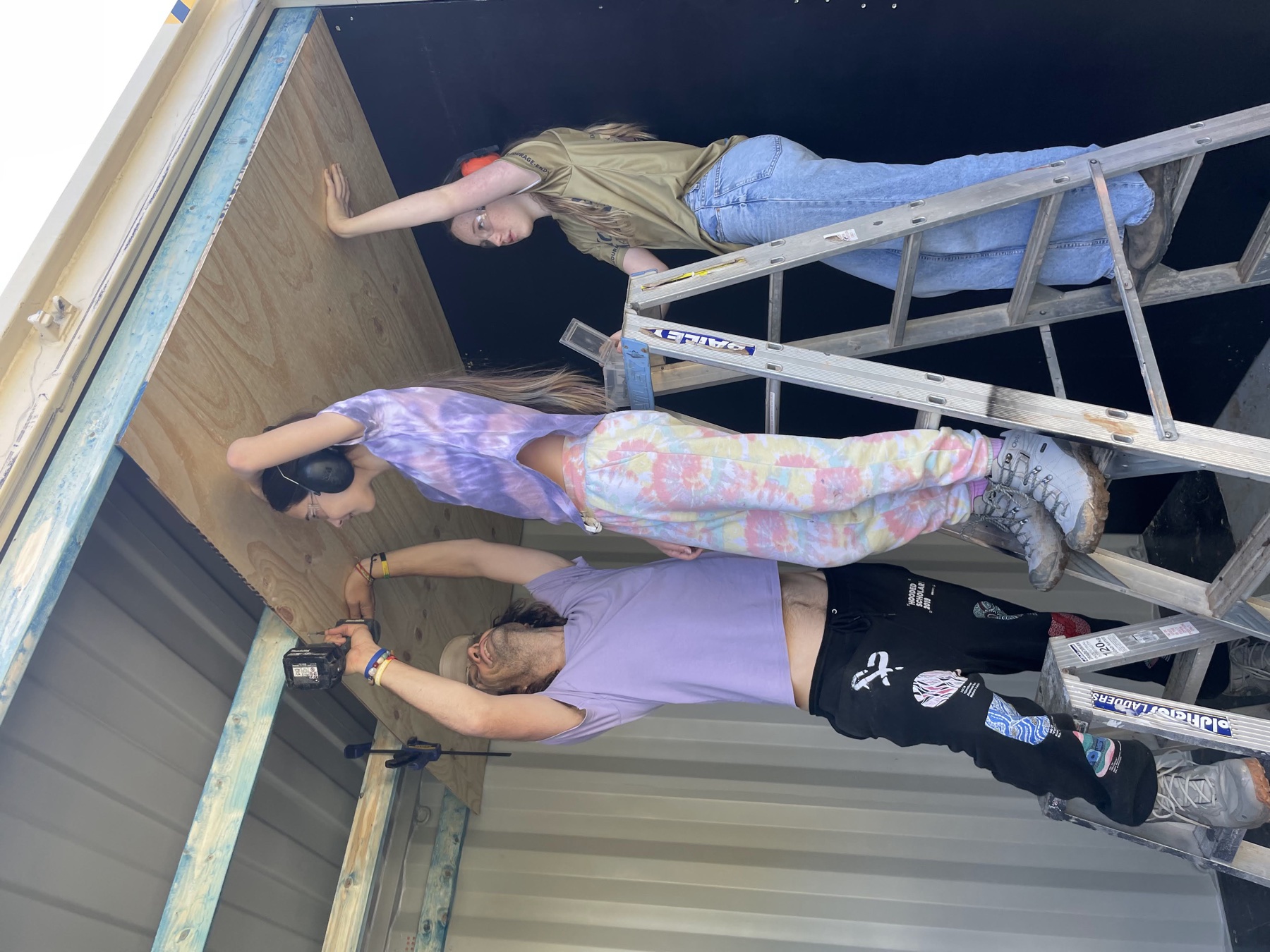
We built CONTAINED as an artwork. I built it with my two daughters, who were eleven and thirteen at the time. Their hands were in it. Their questions were in it. Their lives moved around it while we worked.
My co-founder Nic Marchesi was in it too. Nic knows how to build things that hold up, and he brought that knowledge to the yard: how to line a container, how to hang a door, how to hand an eleven-year-old a drill and stand back. He helped my daughters be part of it rather than watch it, and the four of us did the work together.
And all the time there was another fact in the room with us.
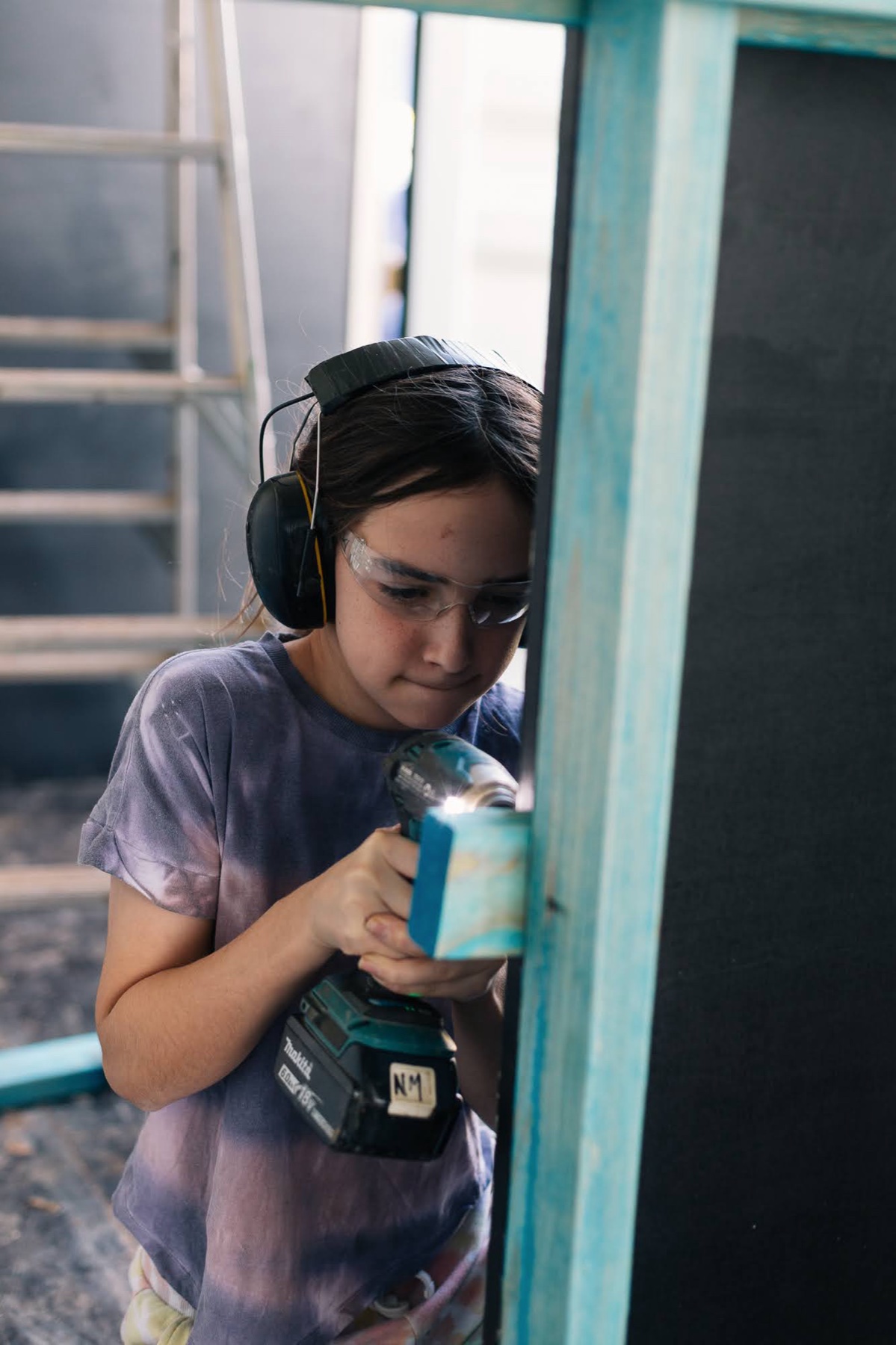
They are of the age that they could be incarcerated.
Once you understand that, the work changes.
A cell is no longer an abstract room built for somebody else's child. The steel acquires a temperature. The lock makes a sound. You begin to understand how close the machinery is, and how casually a country can place a child inside it.
CONTAINED began in that space between love and disbelief.
A father looking at his daughters.
A country looking away from its children.
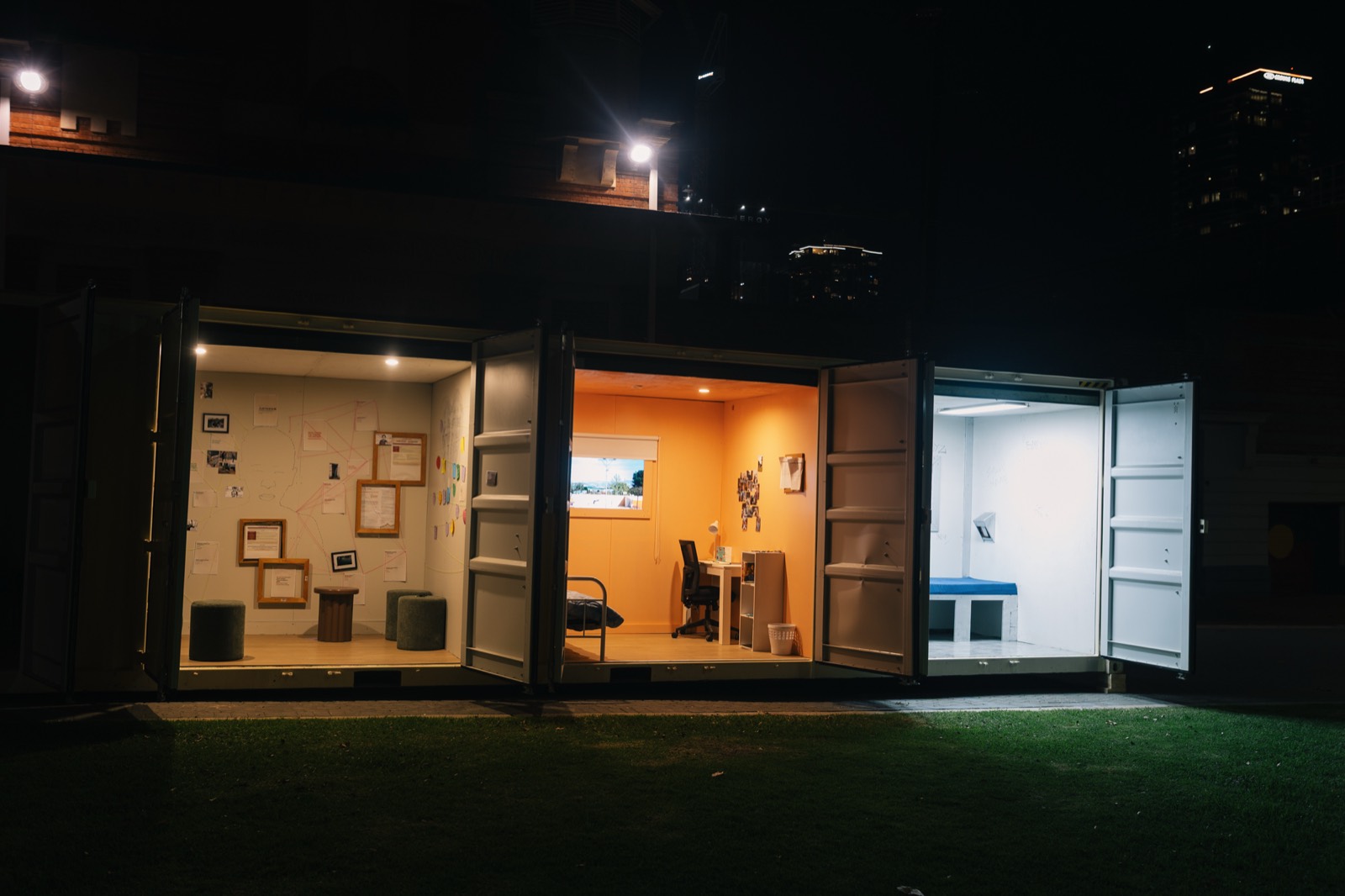
Three rooms
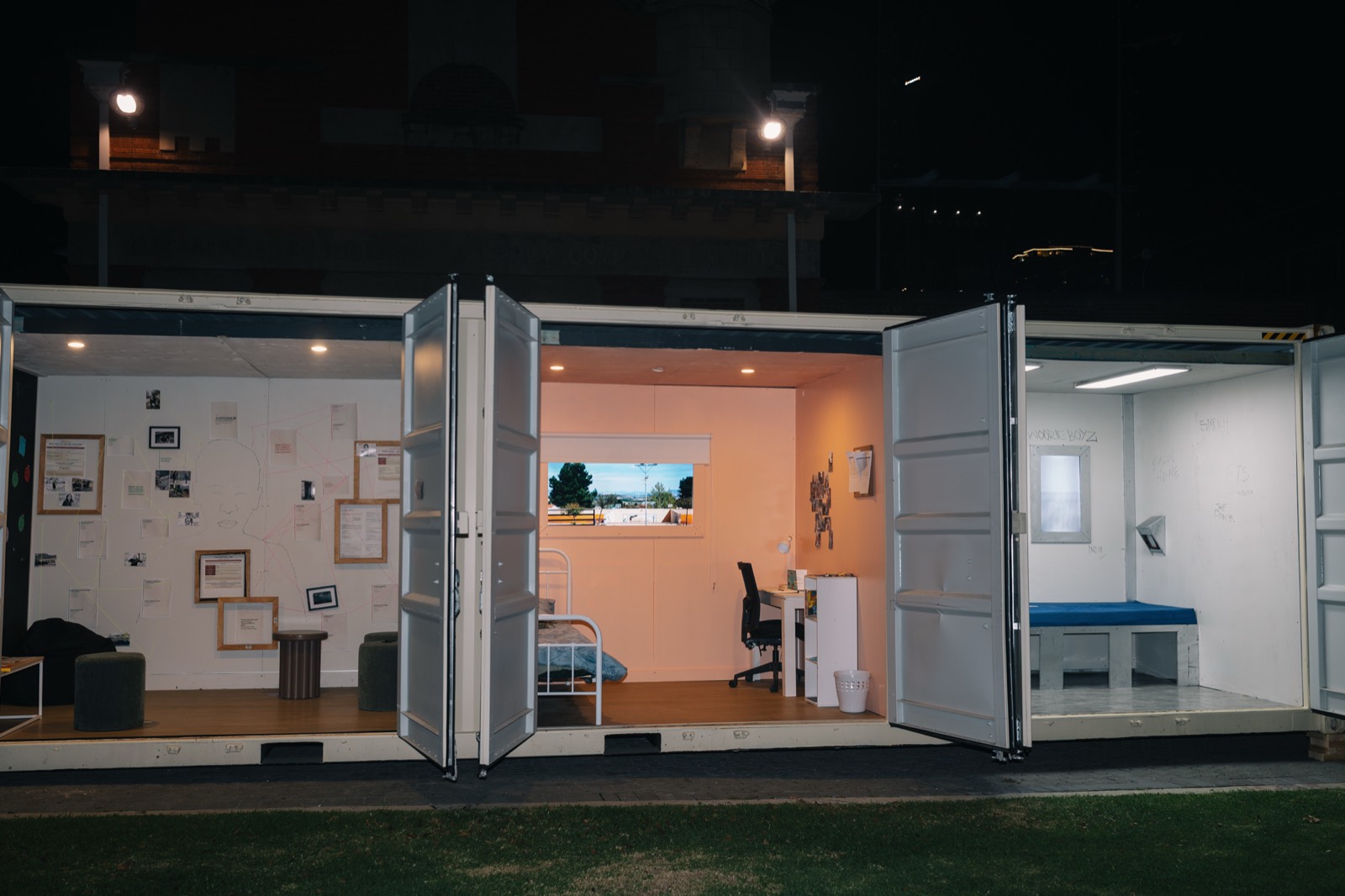
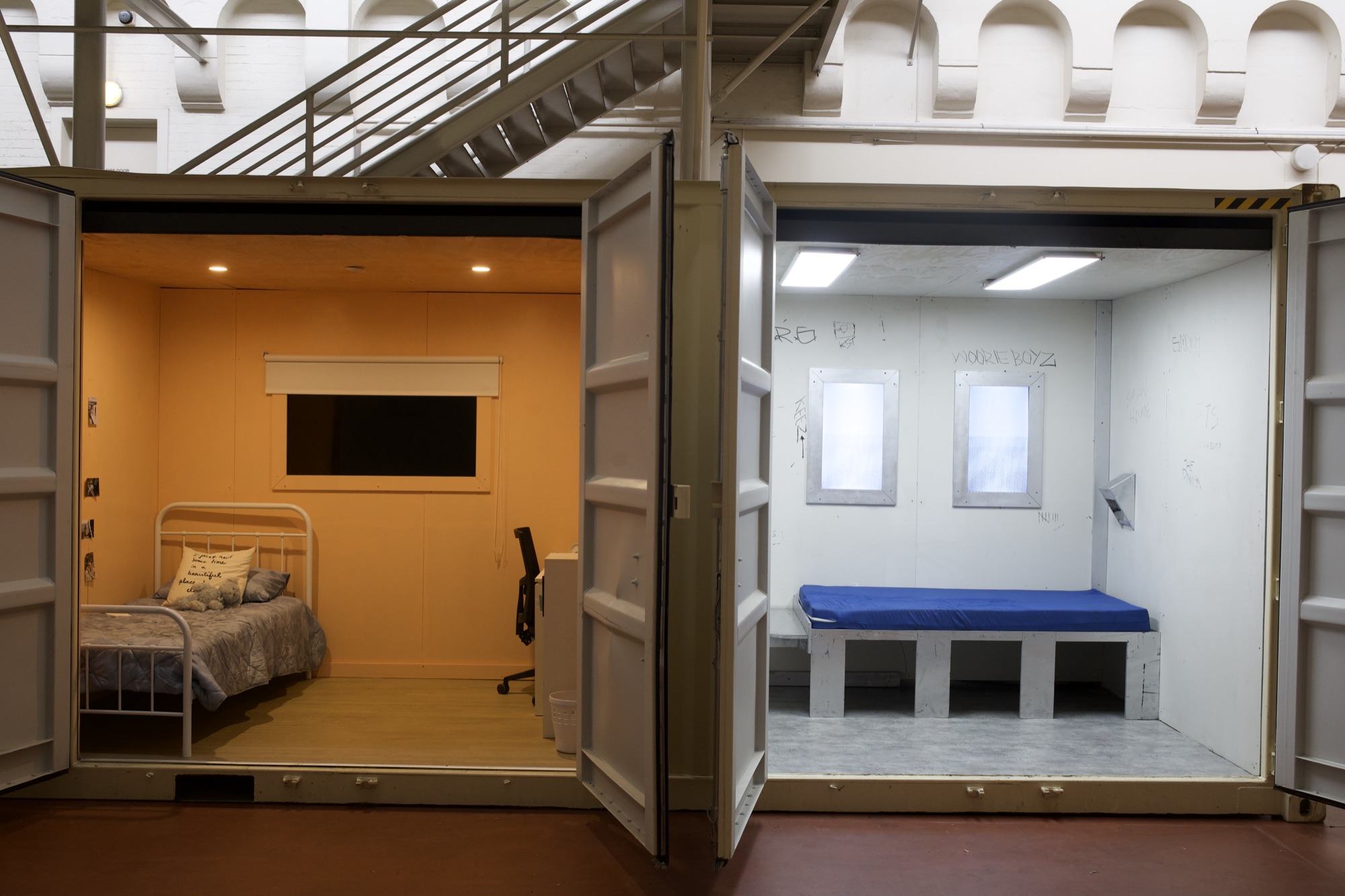
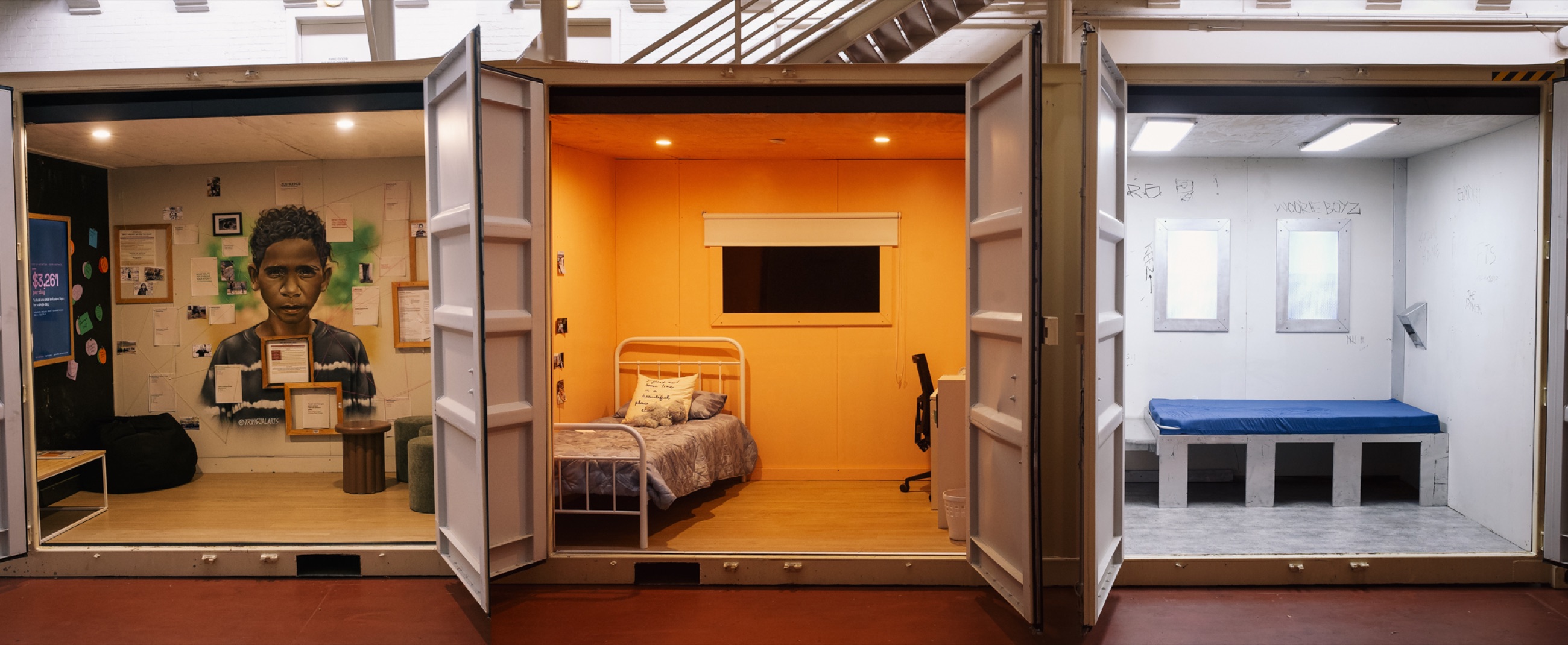
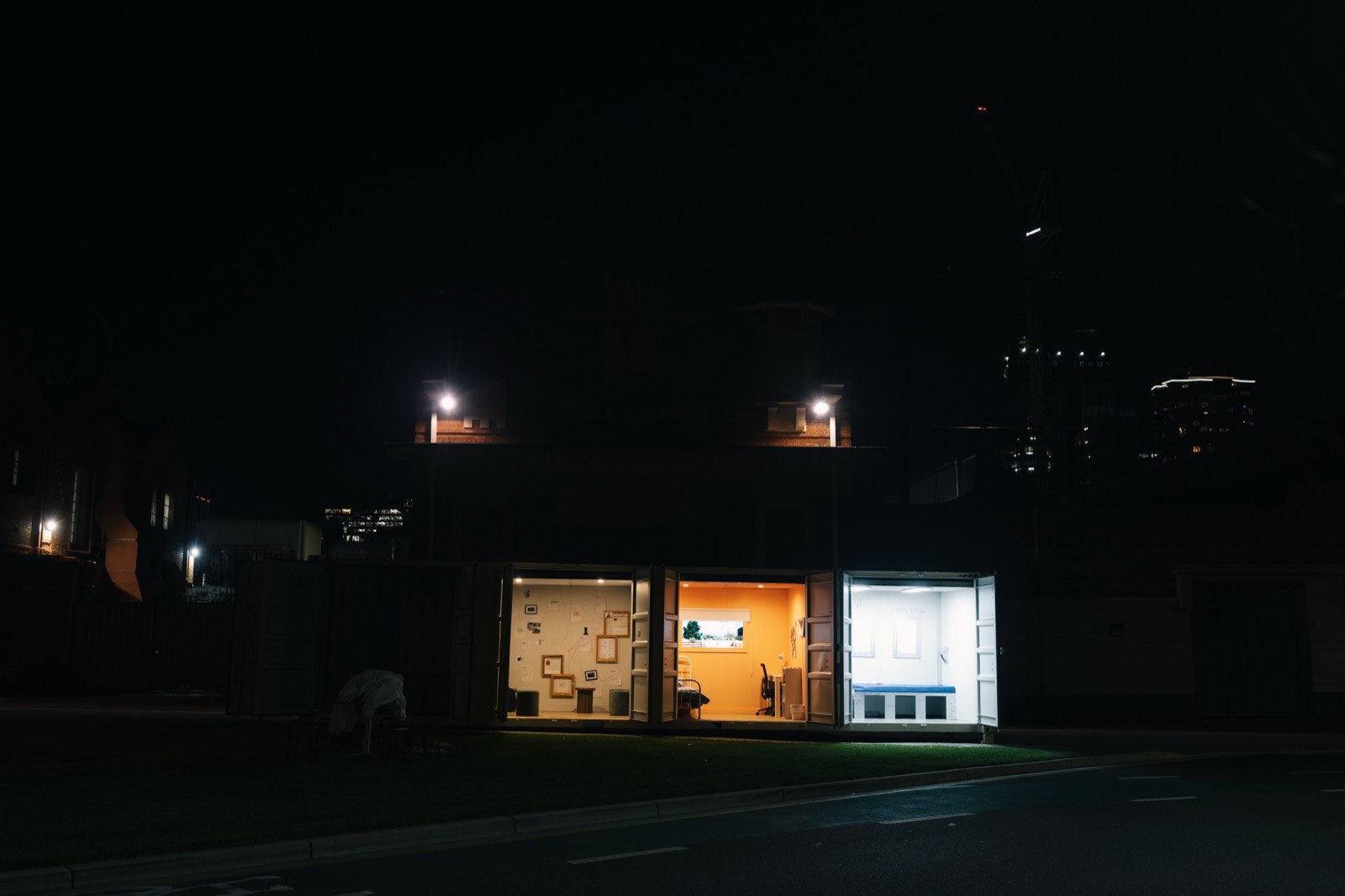
The first room is a cell. It was built from the memories of young people who have been incarcerated. Not from an architect's plan. Not from a government diagram. From what stayed in the body after the door closed.
The dimensions are remembered.
The light is remembered.
The loneliness is remembered.
The room is not a representation of a cell. It is the memory of one.
The second room begins with a diagram from Spain: another way of holding young people as they move through a system. A way that keeps the person visible. A way that does not confuse punishment with care, or control with safety.
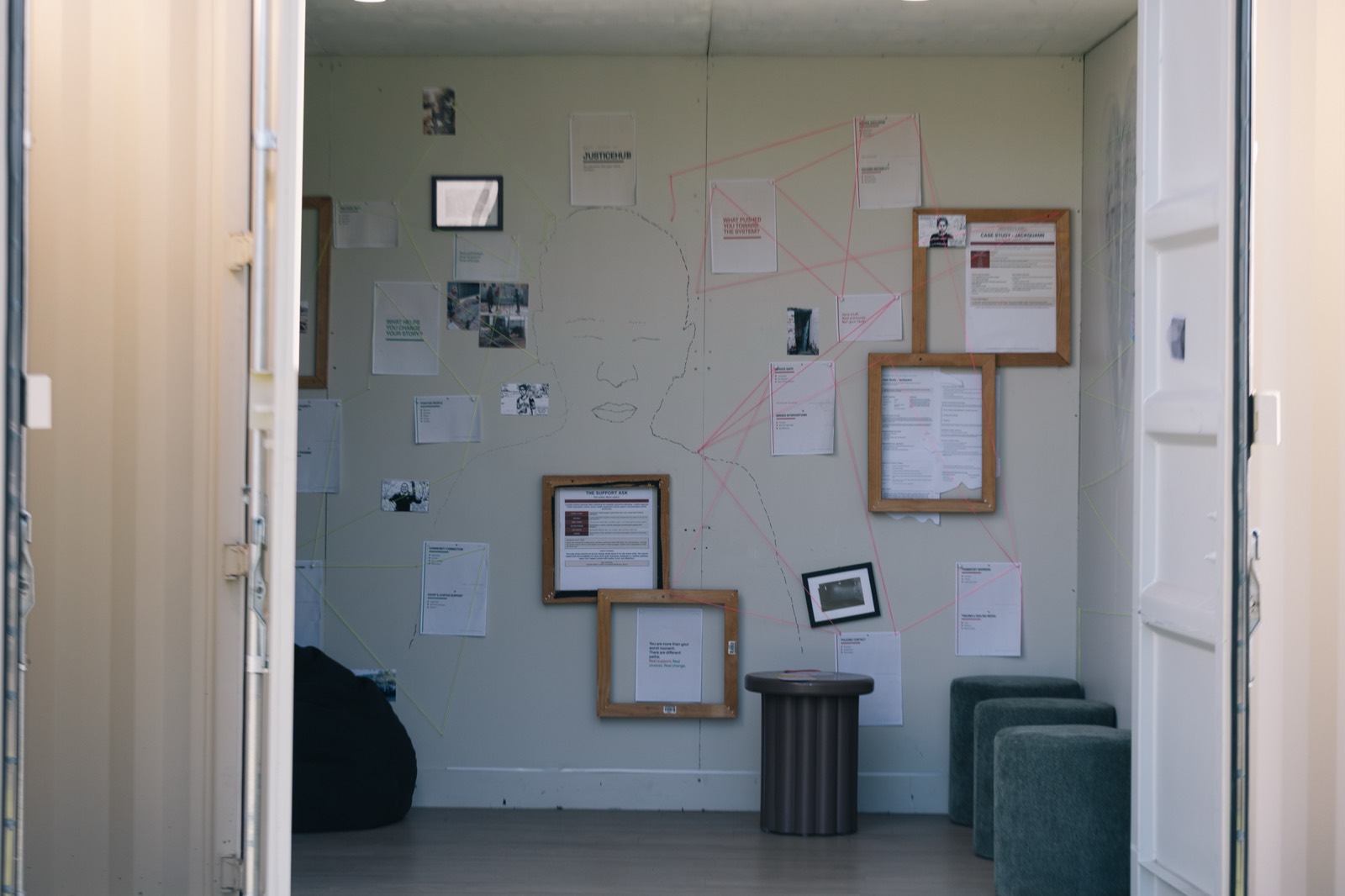
The third room is community. It holds what is already alive. Country. Family. Culture. Elders. Teachers. Workers. Artists. Aunties and uncles. The organisations that keep showing up long after the program money disappears.
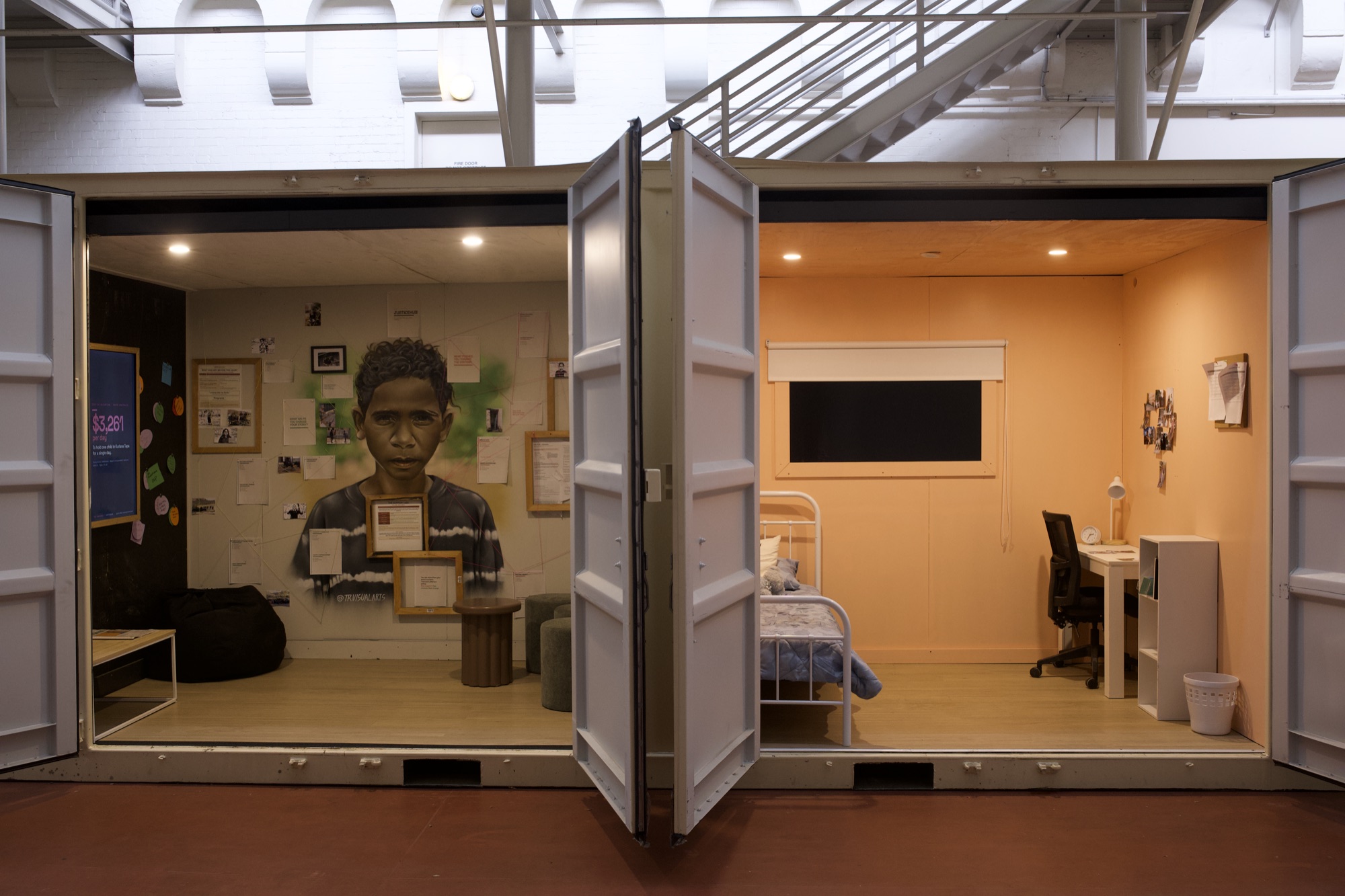
One asks what we do to young people.
The next asks what else is possible.
The last asks why we keep ignoring the people who already know.
One of these we pay for. The other we ask to prove itself.
A young person is removed from the people who know them.
The record grows. The categories harden.
Behaviour is named. The wound is not.
They are returned to the same street with less than they left with.
This road has contracts, concrete, uniforms and habit behind it. It is the default because it is funded, not because it works.
- Detention-based supervision
- $1,141m
- Community-based supervision
- $520m
We spend 2.2 times more removing young people than we spend holding them where they are.
Source: Productivity Commission, Report on Government Services 2024-25, Table 17A.10, national totals. Read live from the JusticeHub funding database, not stored on this page. Aboriginal and Torres Strait Islander young people are detained at 23.1 times the rate of non-Indigenous young people (Table 17A.7).
Asking for a patch of ground
We partnered with the Justice Reform Initiative and the Reintegration Puzzle Conference in Adelaide. Months of work went into preparing properly: building the relationships, involving young people with care, bringing the installation across the country and finding somewhere for it to stand.
The request was small.
A patch of public ground near the conference.
Somewhere visible.
Somewhere delegates could walk to.
Somewhere the story could meet the city.
Then came the meetings. The emails. The unanswered calls. The names passed from one office to another. The search for one person who possessed both the authority and the willingness to say yes.
There is so much administrative red tape in the way of telling a story about a better way to do something. Something that supports community, supports young people, and costs less than what we do now.
A week before the conference, Nic and I pulled the guts of the installation out of the container in Mount Druitt and sent them south. We bought another container. We placed it in a yard in Adelaide. We started rebuilding.
Until an hour before the final decision we had something close to approval for a square in the middle of the city, directly outside the Hilton.
For months the answer had not been yes. But it had not quite been no. That is another way a system exhausts people: it keeps hope alive just enough to make them carry the weight a little further.
Four o'clock
On the final day, council told us we needed a list of additional things. Those things would take another three or four weeks.
This came after months of preparation. After senior people had spoken to council on our behalf. After the container had travelled across the country. After the work had been built and the people had been invited.
Not a policy anyone would defend.
Not a danger anyone could name.
Not a decision anyone wanted to own.
Just a counter. A clock. A person collecting their things.
This is where the story of the container and the story inside the container become the same story.
A young person rarely encounters the system as a single, deliberate thing. They meet a person behind a desk. A tired worker near the end of a shift. A form with the wrong box marked. A process being applied because it is the process.
Each person performs one small action. Nobody believes they made the decision. But the door still closes.
The process is not neutral.
It has momentum.
And its momentum is towards no.
Brenz said yes
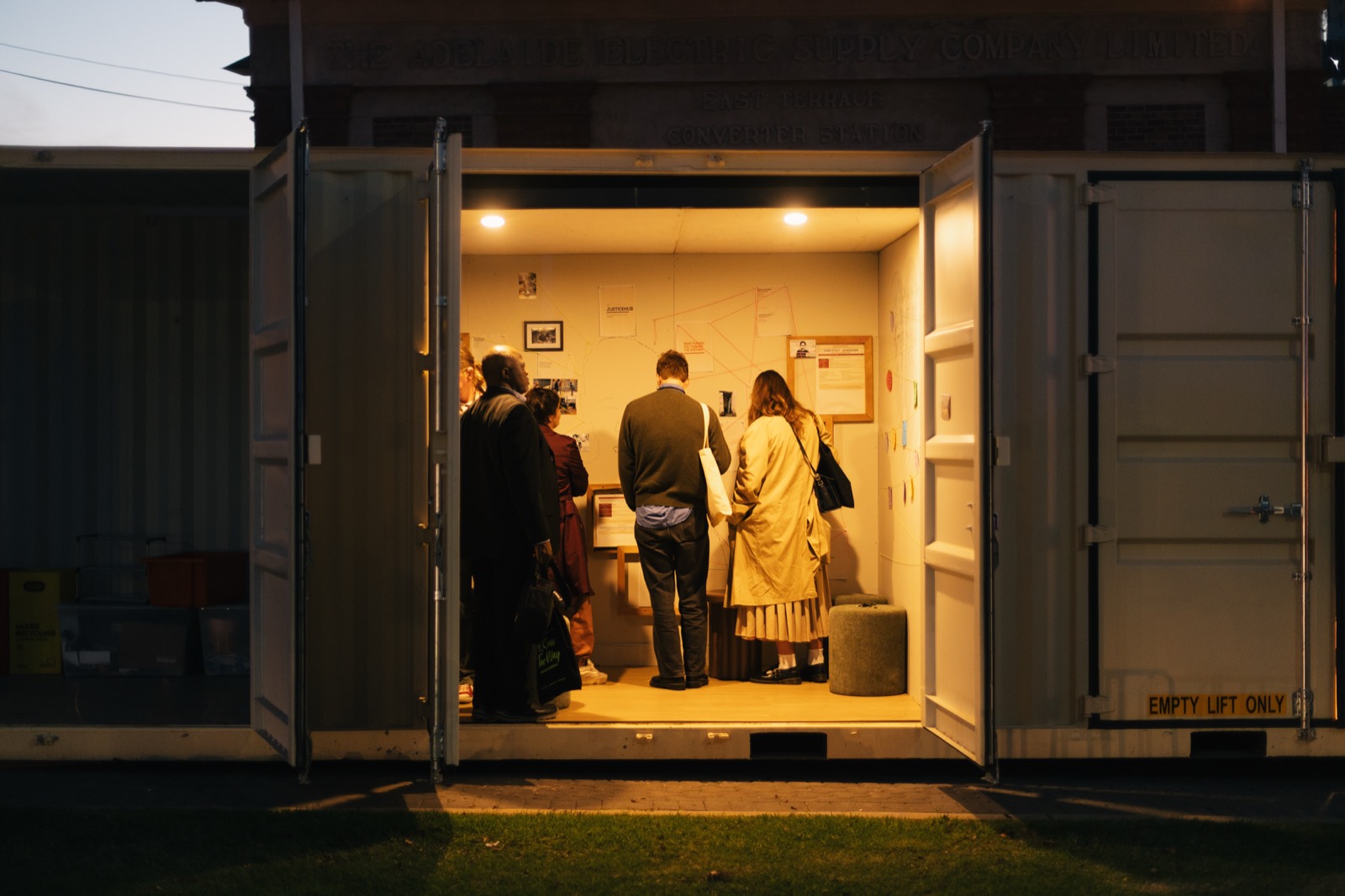
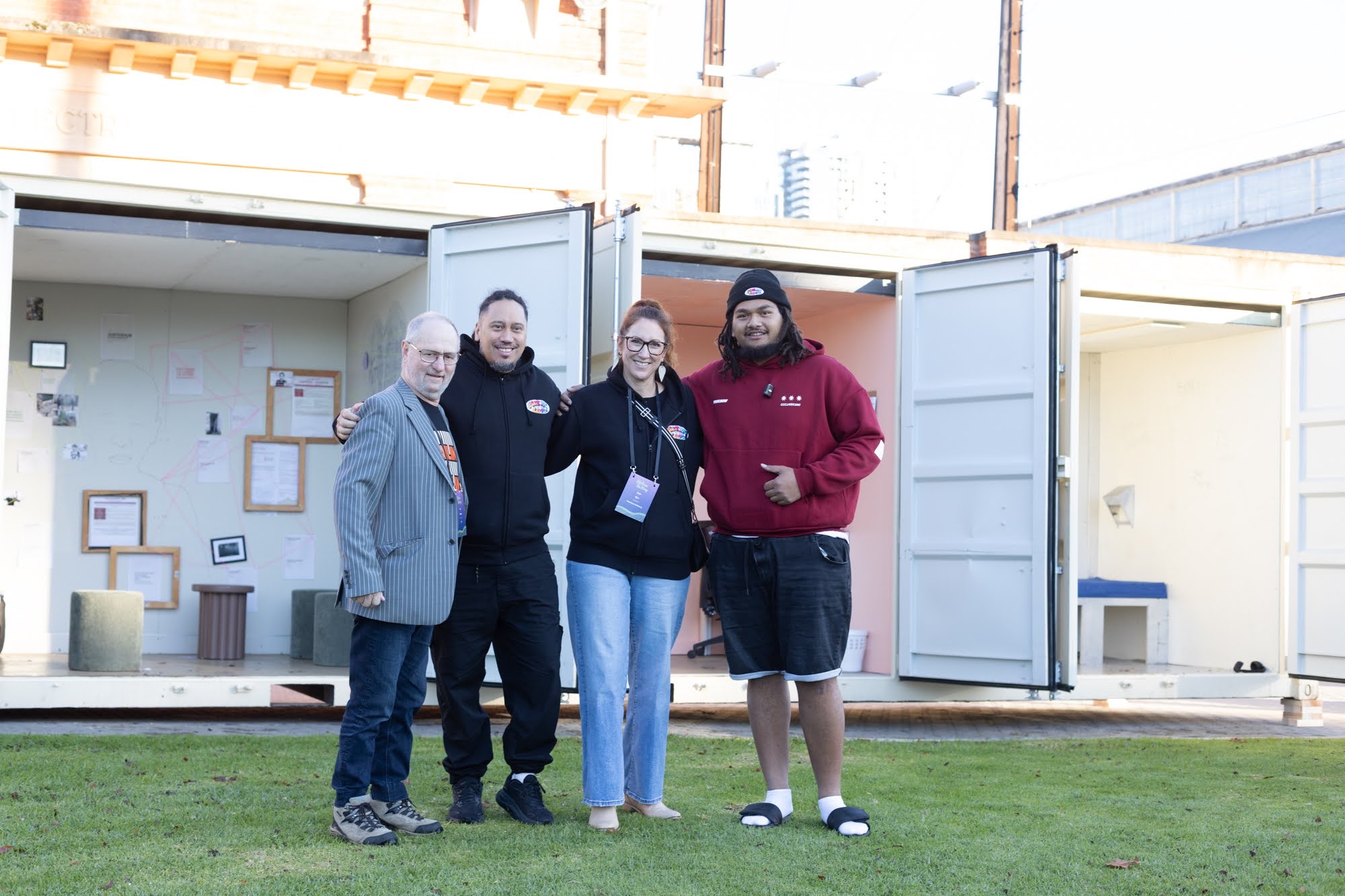
Then Brenz Saunders, CEO of Tandanya, said yes. Not after another three weeks. Not after another chain of emails. He offered us the space in front of his office.
So we put the container there. We hired a bus and brought people over from the conference. Somewhere between fifty and a hundred people walked through.
One relationship achieved in an afternoon what months of process had failed to do. That is not an accusation against Adelaide. It is the finding.
Institutions protect themselves through procedure.
Communities move through relationship.
One asks whether every box has been ticked. The other asks what is needed, who is here, and how we can help.
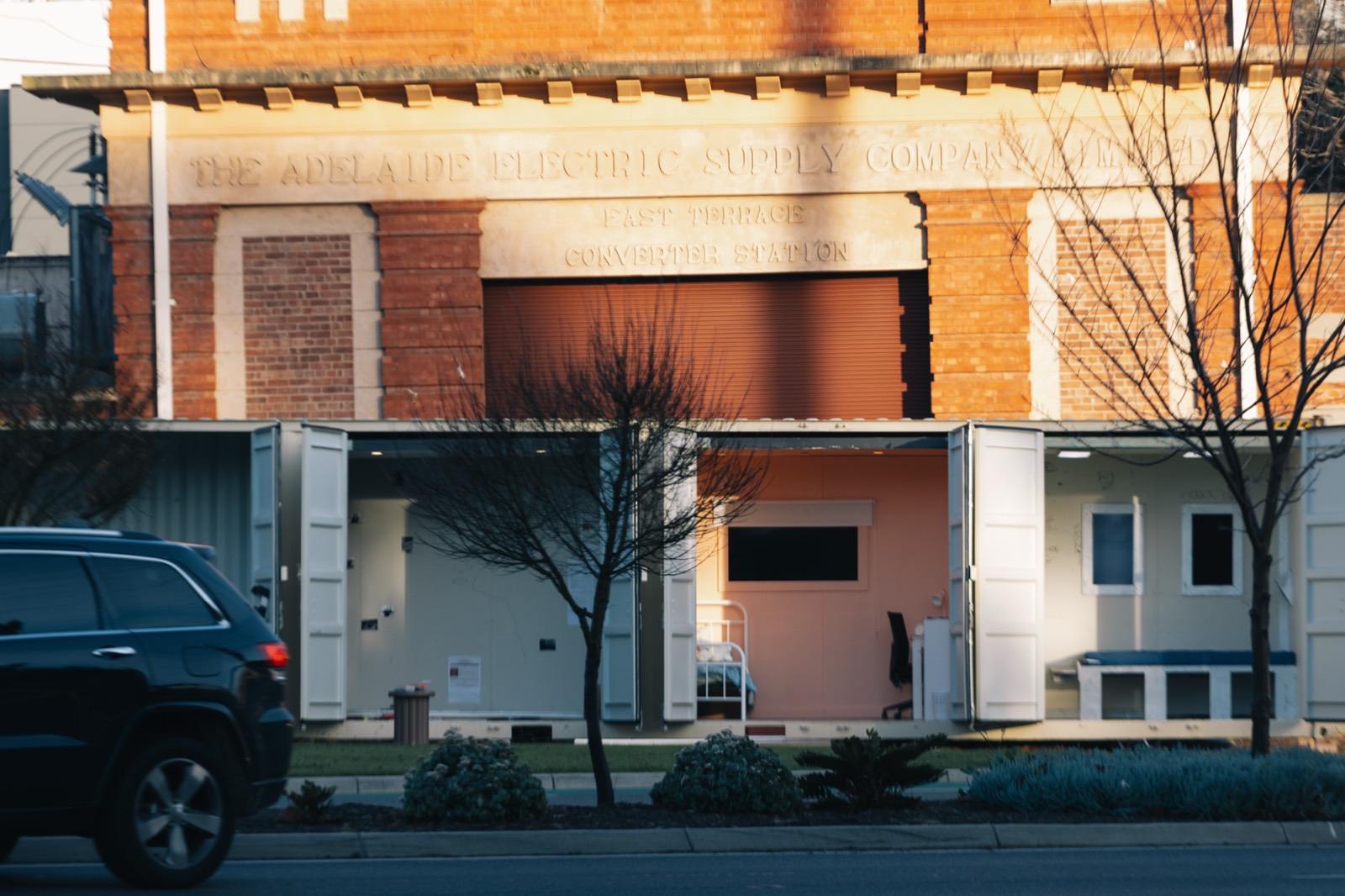
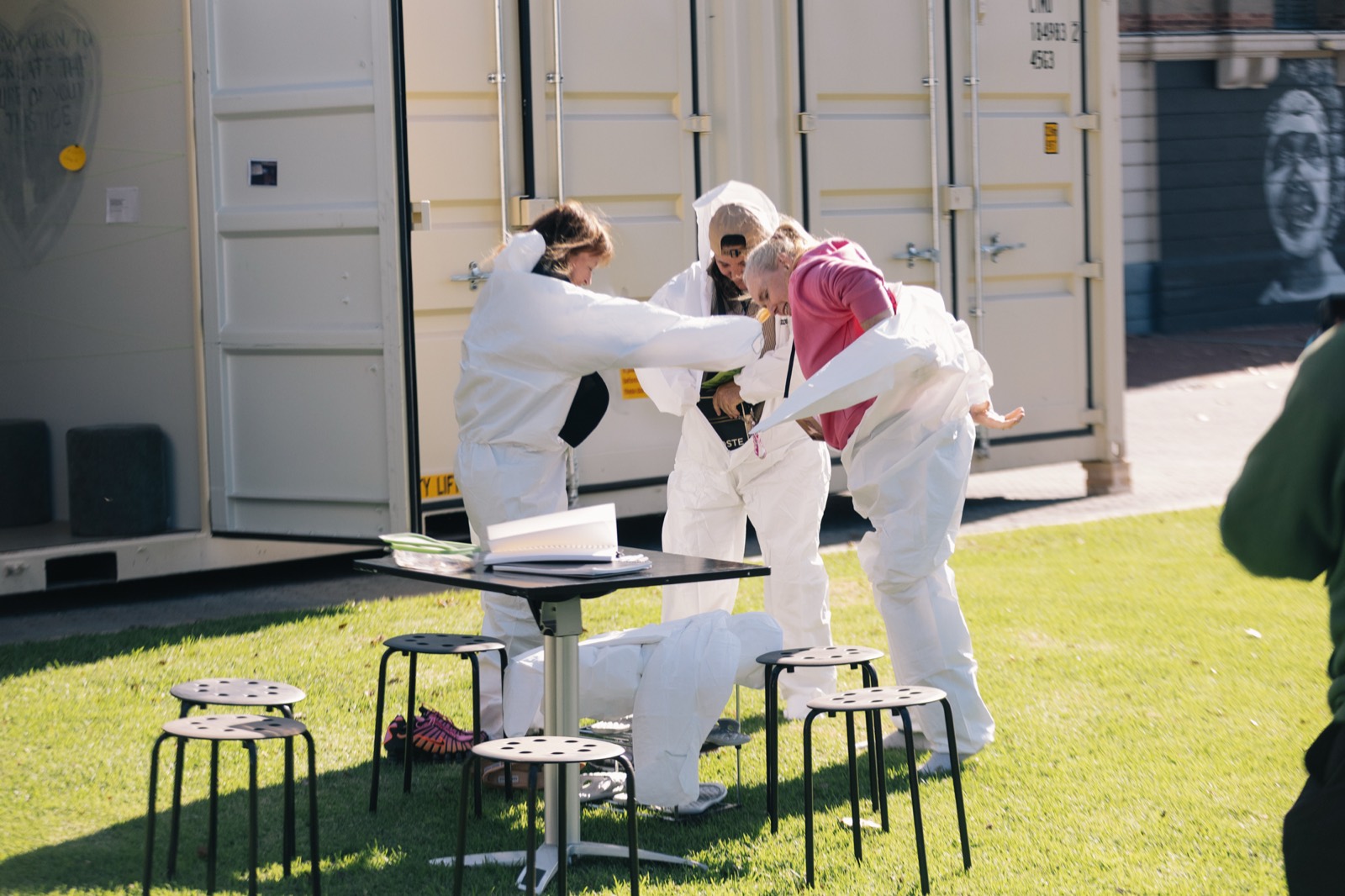
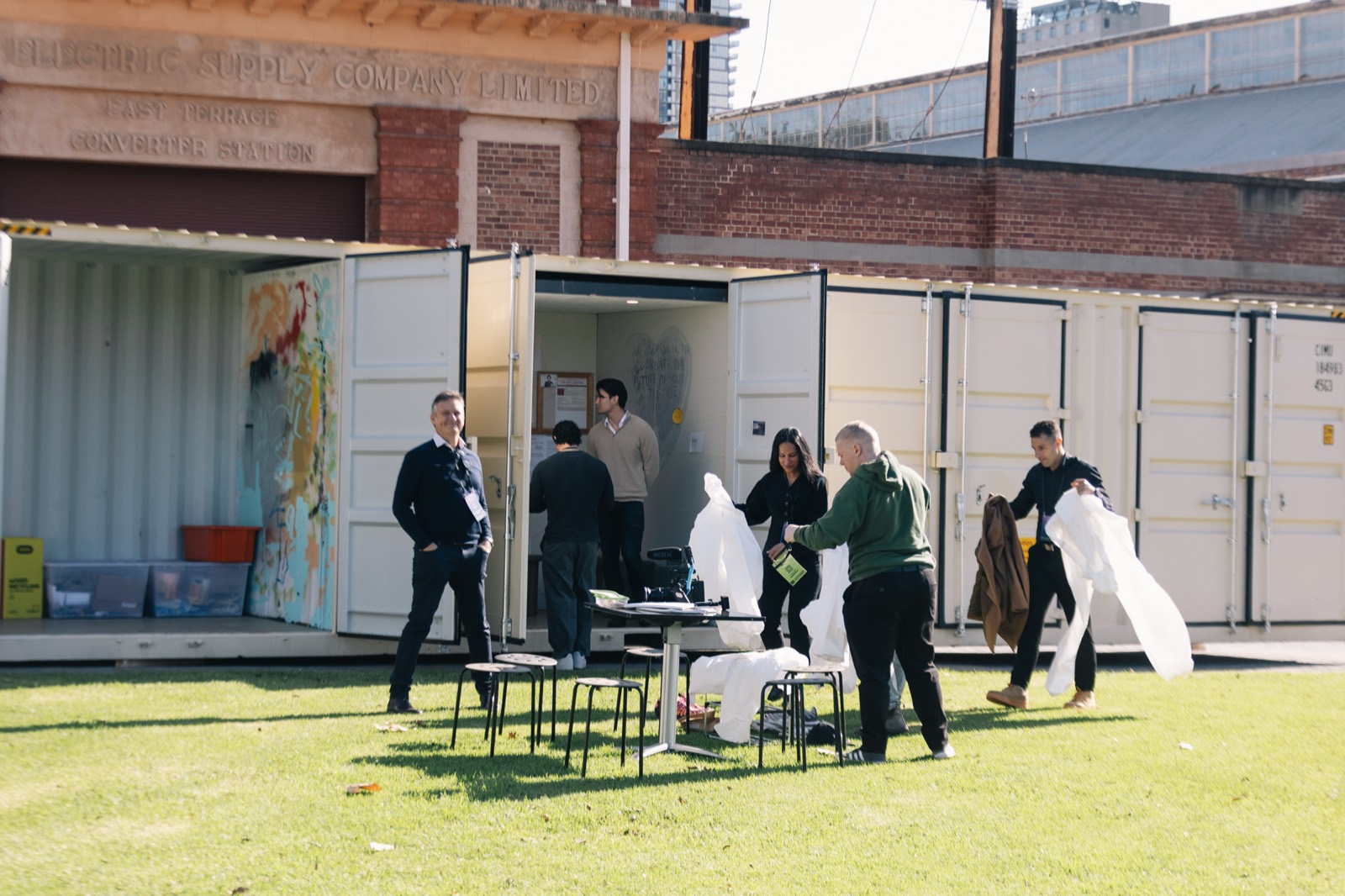
At night the rooms changed. The steel held the darkness. Voices became quieter. People stayed longer. What had been an object on the street became a place of witness.
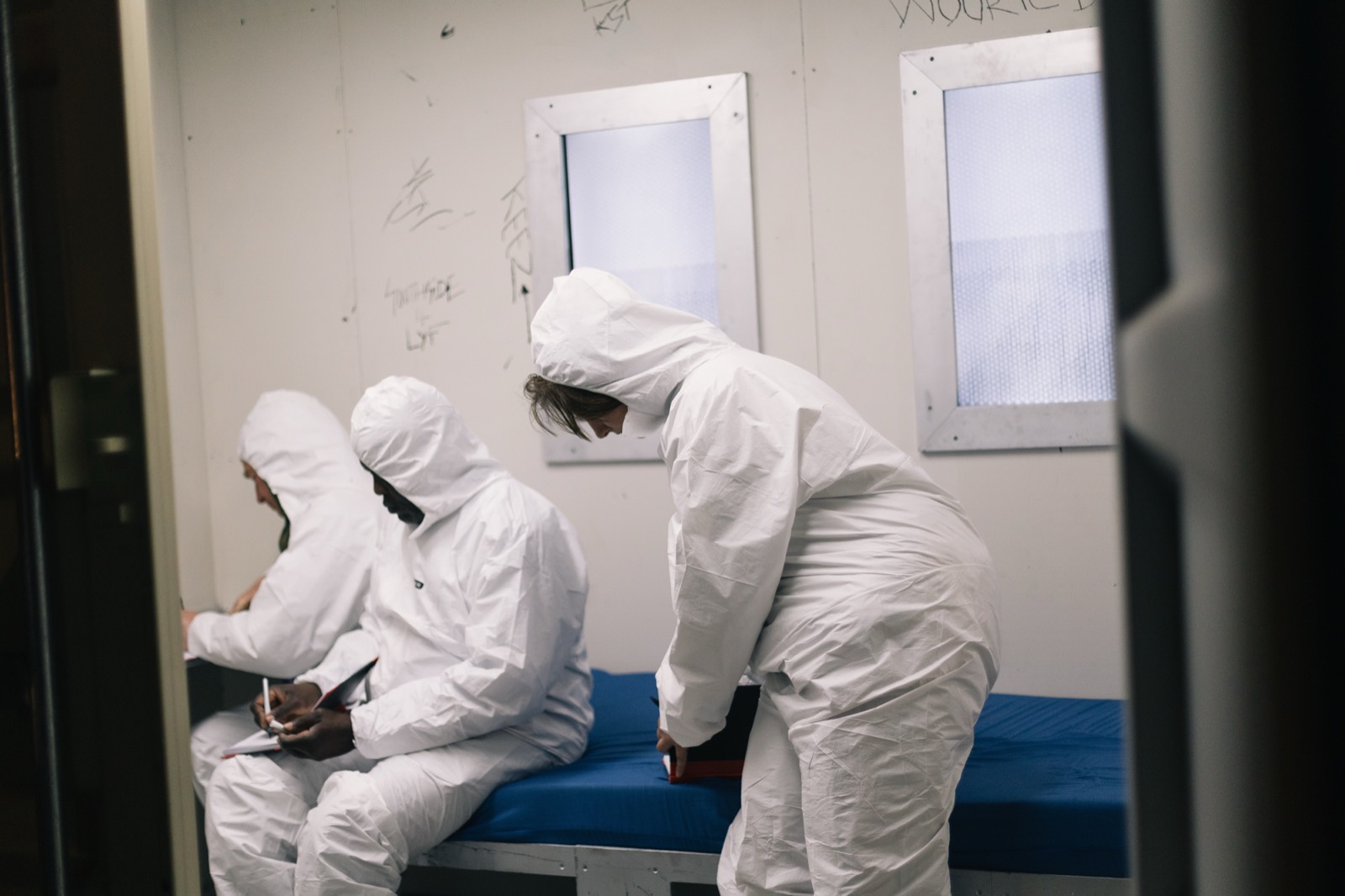
What happened inside
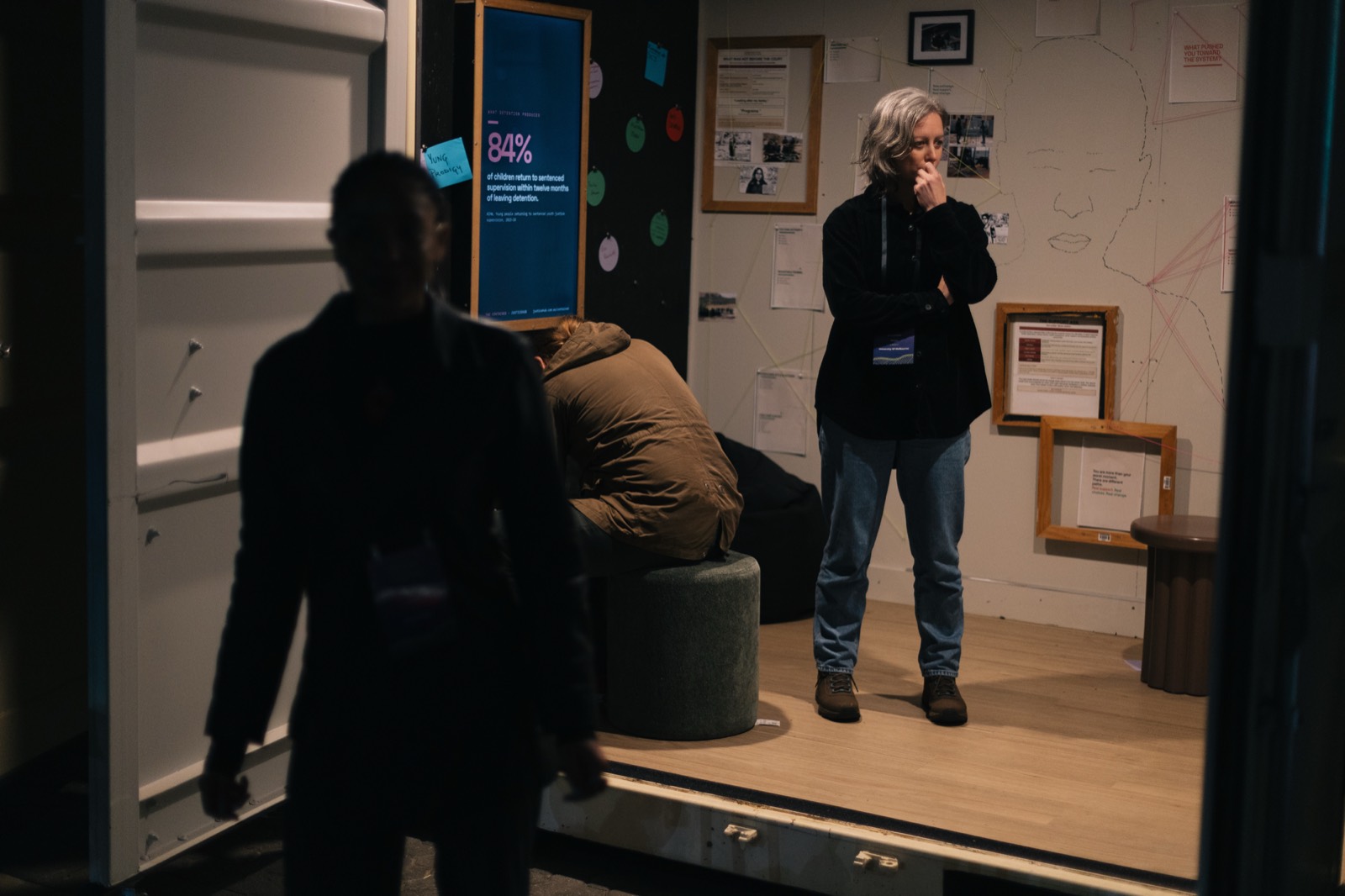
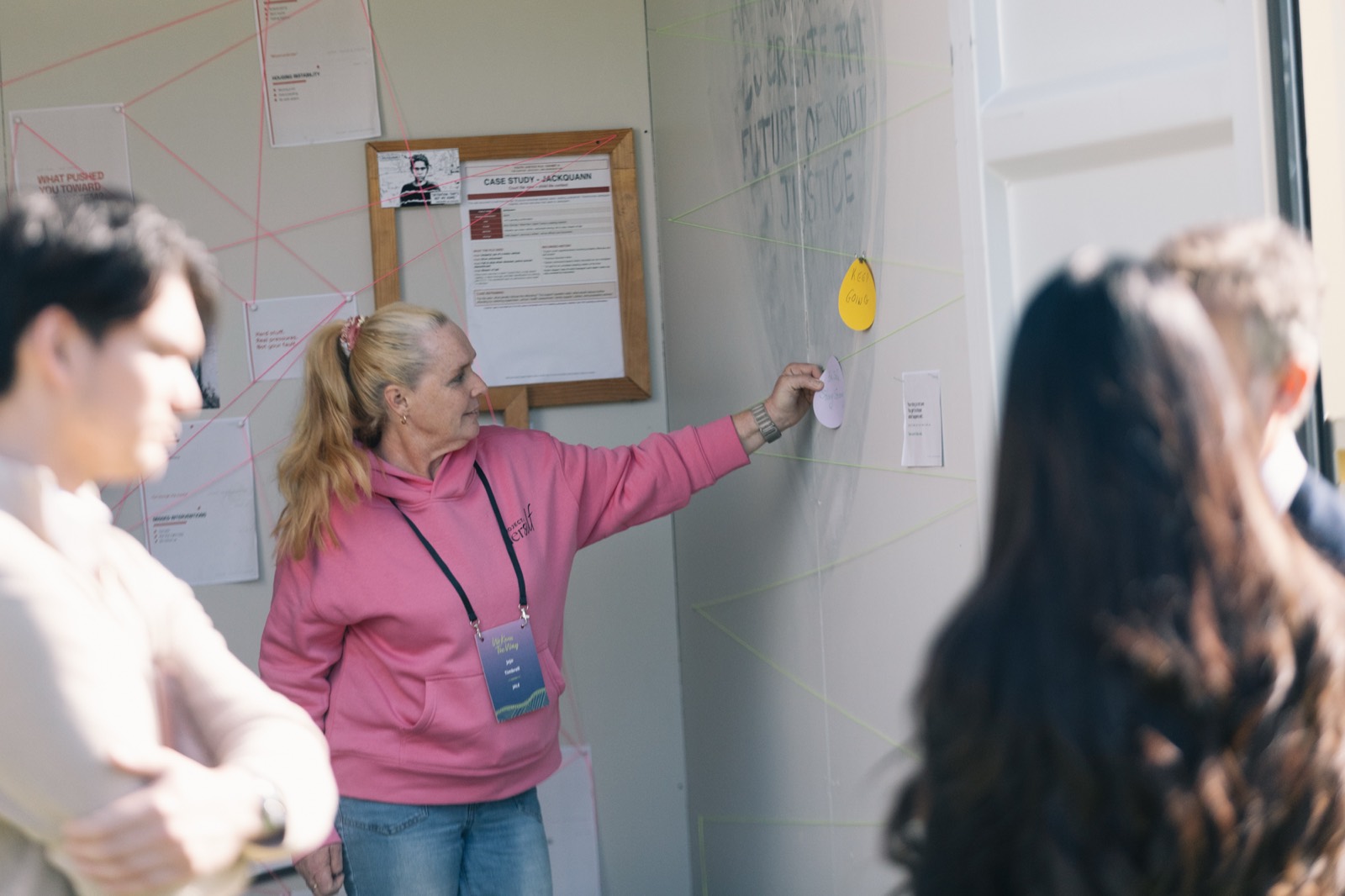
Inside the container, people encountered the story of Jackquann, a young person from Mparntwe. He is fourteen. He lives with his grandfather at Upper Camp, he loves basketball, and he has been to the Alice Springs Detention Centre.
“It’s four o’clock and I’m going home and I’m not in tomorrow.”
Said to a man trying to find a patch of ground for an artwork about young people.
“At six o’clock you get locked down. You wait till tomorrow.”
Said by a child in the Alice Springs Detention Centre.
The same sentence, said two hours apart, in two cities, by two people who will not be there tomorrow.
Asked what he would tell politicians, Jackquann said one word. “Programs.” Everything in this story is one grown man failing, for months, to get a program in front of the public.
They were not asked to diagnose him.
They were not asked to fix him.
They were asked to meet him.
To listen. To feel the distance between the young person and the story a system might tell about him. They wrote messages. They named other people whose stories should be heard. They sat with what they had experienced. They left marks of care inside a structure built to represent containment.
This is part of what Oonchiumpa teaches through its work: a young person is never the smallest story told about them. Behind the official language are family, Country, ancestry, humour, hurt, intelligence, obligation, possibility and love.
A system sees a category.
Community remembers a whole person.
What people wrote to Jackquann
You are so much more than the worst mistake you have made. You belong.
You have a spirit bigger than what they make of you. You have a story brighter than what they write about you. Connect with that and remember you are never alone.
We've got your back!
I hear you, I see you! You've got this!!
You are a leader now. Peel back the layers and reveal that self.
Fighting for what's right is a long, slow, hard slog. The struggle will take from you, make no mistake. But it will also be the most rewarding and important work you can do. To stay in the fight, don't give it all to the struggle, save some for home.
Focus on the things, people and places that make you happy. You are worth it, you can do it. Don't be shame to access support. You deserve it!
Your strength and potential haven't even been fully explored yet, and look at the ways in which you are driving change. Your ancestors got you, young one.
You have control over your choices, and those make up your future. You've got this!
This is your story. Own it!!
The colonial web is messed up. We are listening, working.
You are enough. You are loved. Keep going.
Stay staunch bro, we love you.
Connection to Country and ancestors.
Be safe. Stay strong.
Drop the album!!!
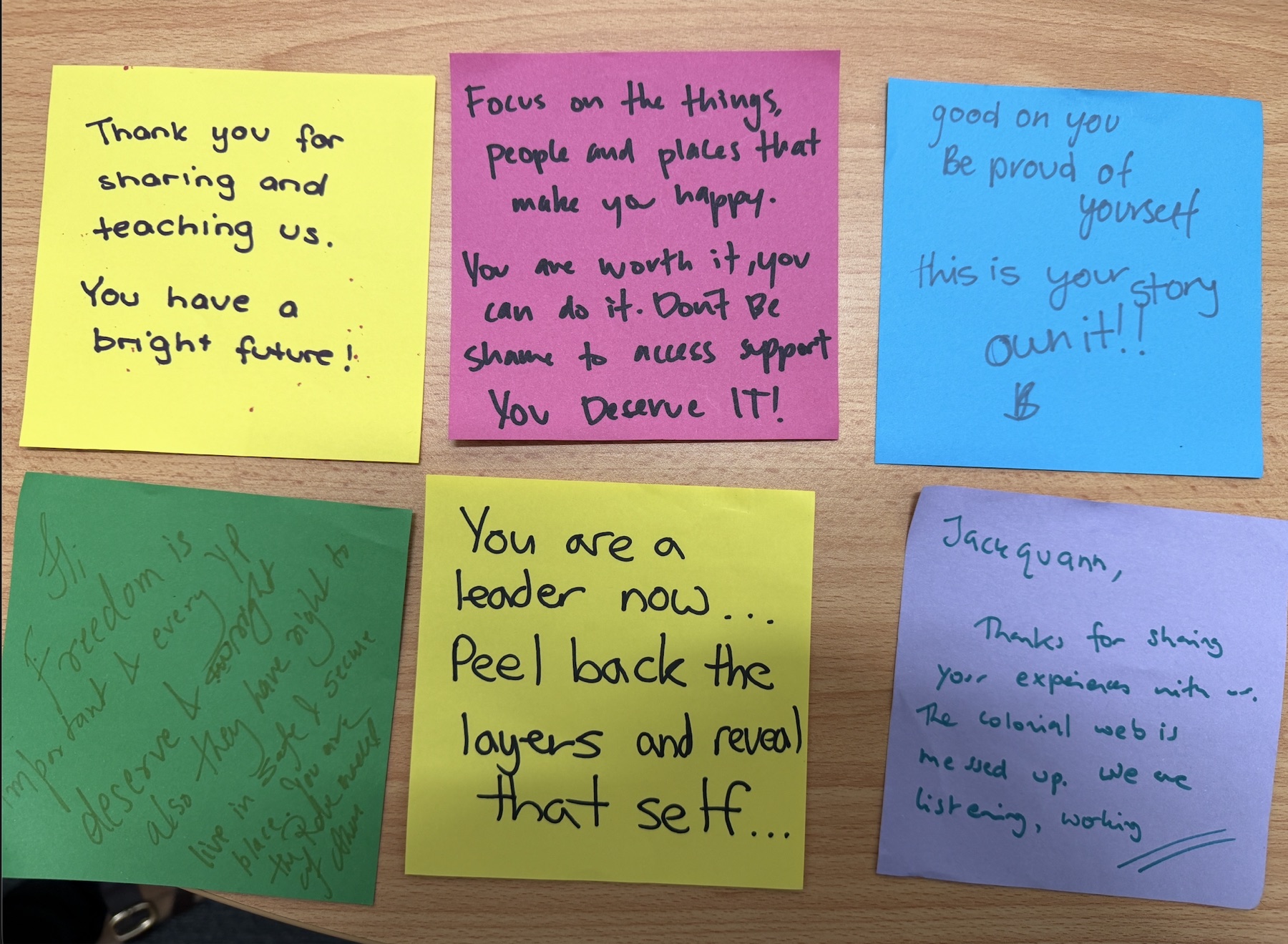
Written during the Adelaide activation and transcribed verbatim, spelling and all. Several notes are signed; the signatures are not transcribed, because the people who wrote them were writing to a boy rather than publishing.
What visitors wrote in the cell
A journal sat on the cell's concrete bed. People wrote into it after sitting in the room, some of them from memory rather than imagination. Their entries are reproduced verbatim, spelling and all. Signatures appear only in the handwriting itself, never in the transcriptions.
If you left a dog in here, they'd call the RSPCA to come take it off you. No one is safer because of this.
This place gives me anxiety. No child should be in here.
Cold, instant anxiety, forgotten, loss of sense of self / identity, no self expression. Alone, trapped.
Very quickly would take its toll. The lights too bright, the bed ice cold. This place would destroy a soul. Get me out of this hellhole.
Isolation. Nothing but your thoughts. Young ones should not be incarcerated.
How many others have stayed in here? Couldn't they have painted the walls first? I need sunshine, I hate the fluro lights. Are the lights always on? How can I nap? Are there pillows and blankets? When does this get cleaned?
Lose hope. Lose family. Lose compassion. Lose sense of identity. Lose empathy. Lose… What a terrible place.
Kids deserve care. Deserve comfort. Deserve love & deserve hope. They should not be criminalised for their parents circumstances.
There has to be a better way. One where connection, not isolation, is the solution.
NO PLACE FOR KIDS
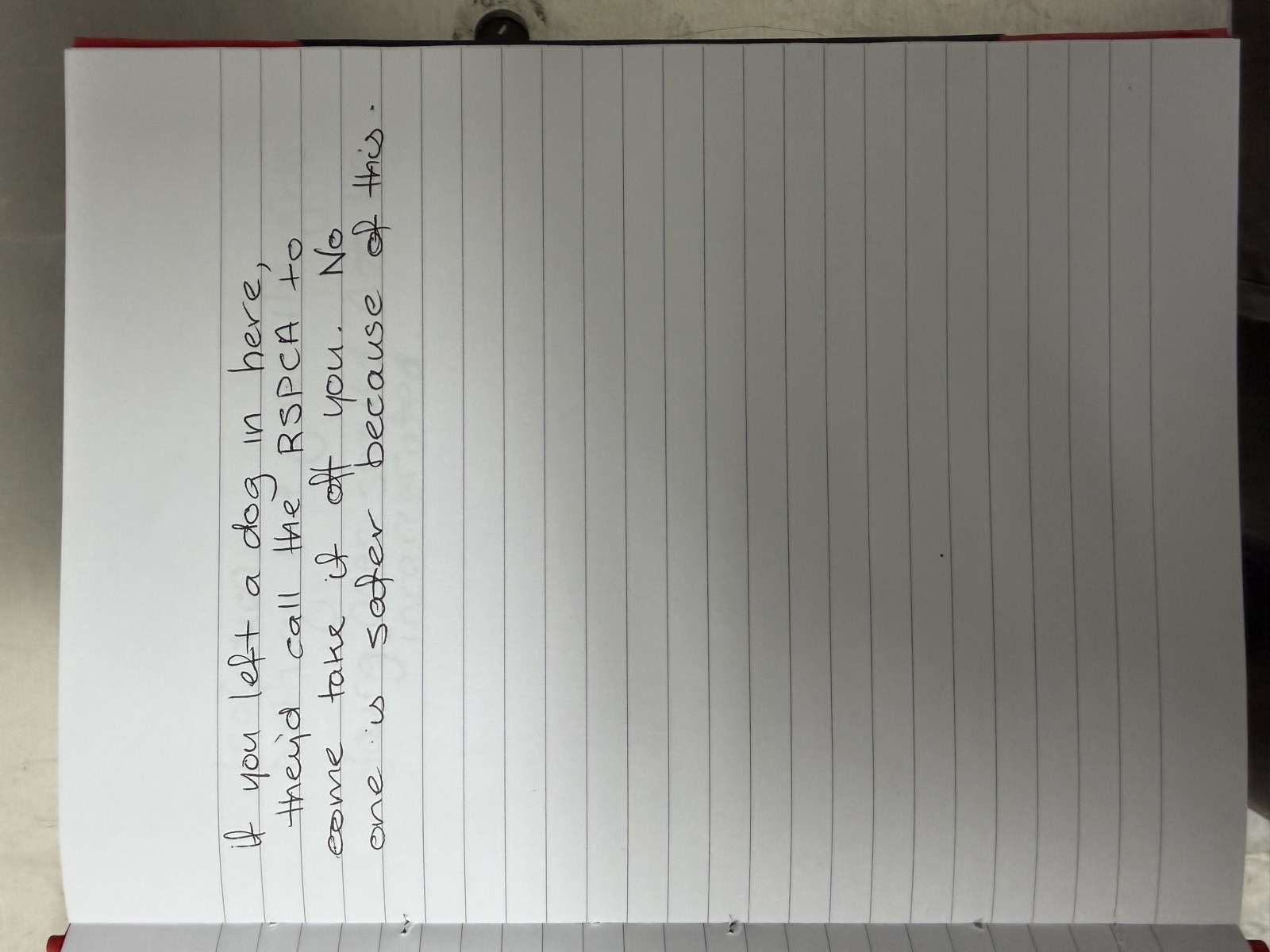
All twenty pages are governed Empathy Ledger media, released for display on 17 August 2026 and withdrawable at any time. Signatures appear only in the photographs, as they were written; none are transcribed here.
The cell says: this is what you are.
The messages say: you are larger than this.
The system says: your story has already been written.
Community places a pen in your hand.
The question is not what works. It is who is still there.
A system arrives when a young person meets its criteria and leaves when they stop meeting them. A basecamp does not have criteria. It has people, and they were there before the order and they are there after it.

A service reaches him if he is on a list, in a catchment, and inside an eligibility window.
Oonchiumpa picks him up and takes him to school. It also takes him to the cinema. Neither is a program.
The consistency is the intervention.
That is Oonchiumpa’s own words for it, and it is the whole argument. Not a better program. People who do not leave. Resource that, and you get a country where safety for the community and safety for the young person are the same thing rather than opposites to be traded against each other.
The room found a home
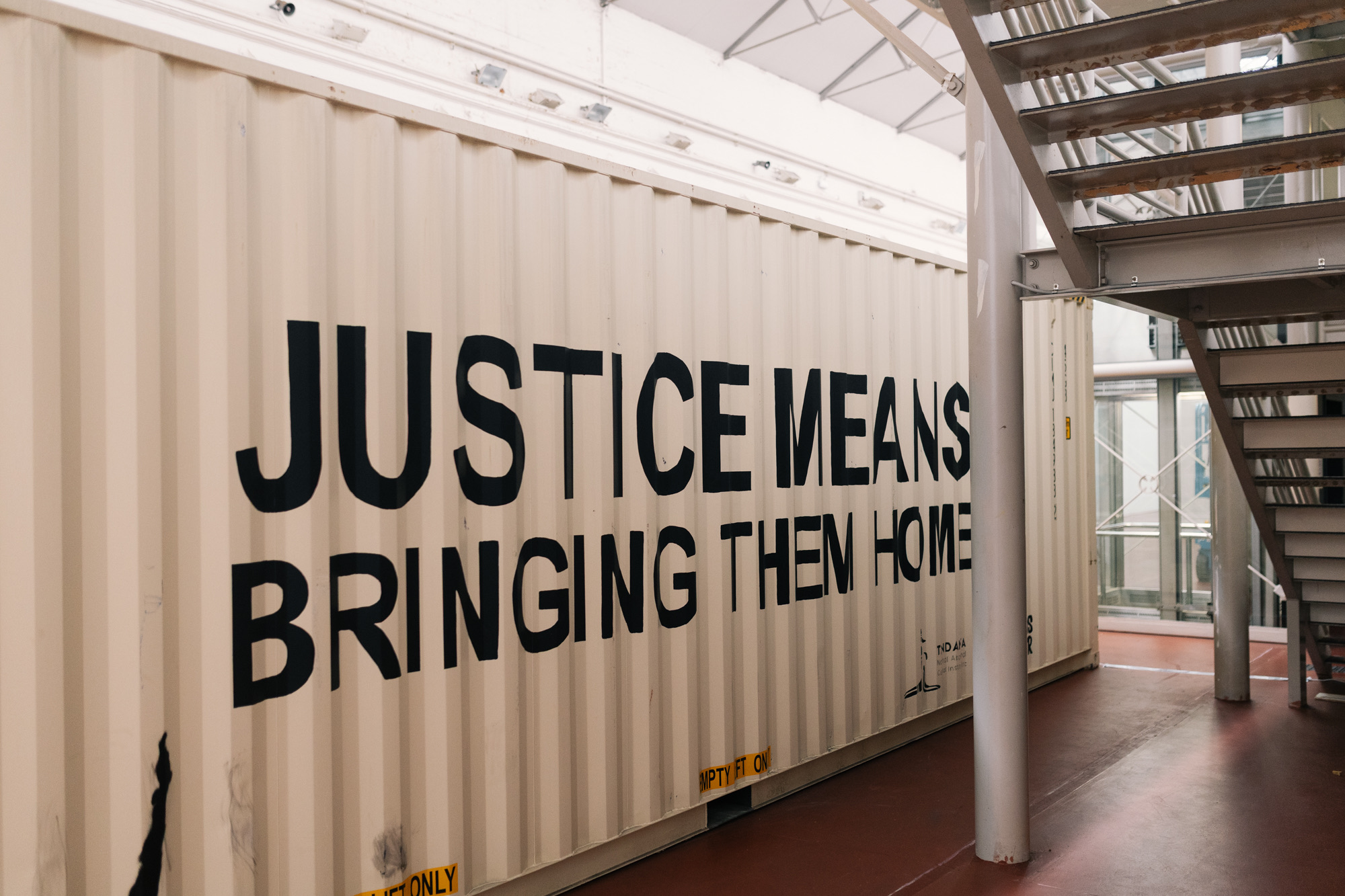
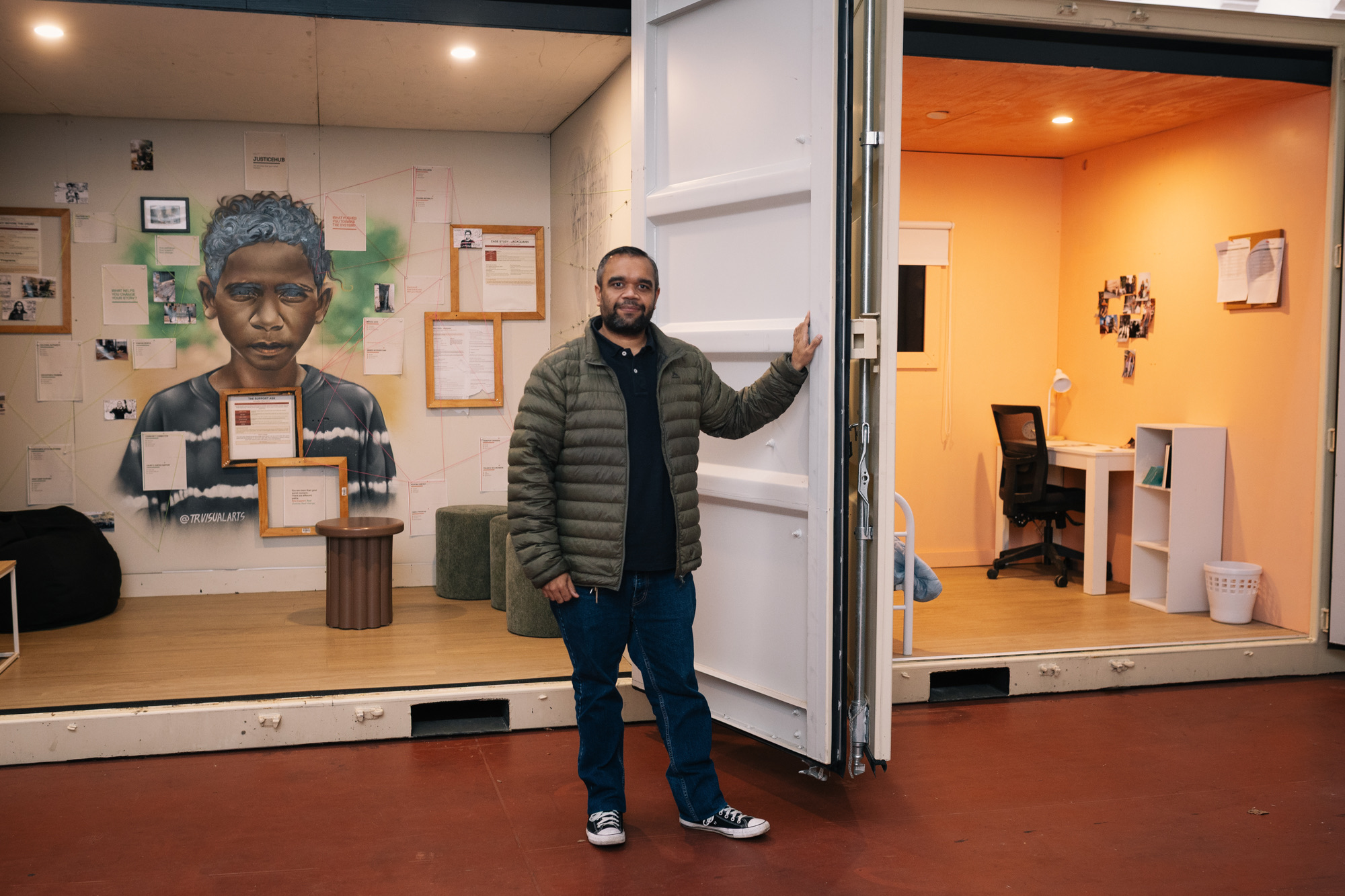
After the activation, Tandanya brought the installation inside. Through that relationship we met Thomas Readett. He painted Jackquann's portrait in the third room, the community room, and carried words and images across the side of the container.
The young person who had first entered the work as a story became a face looking back at the street.
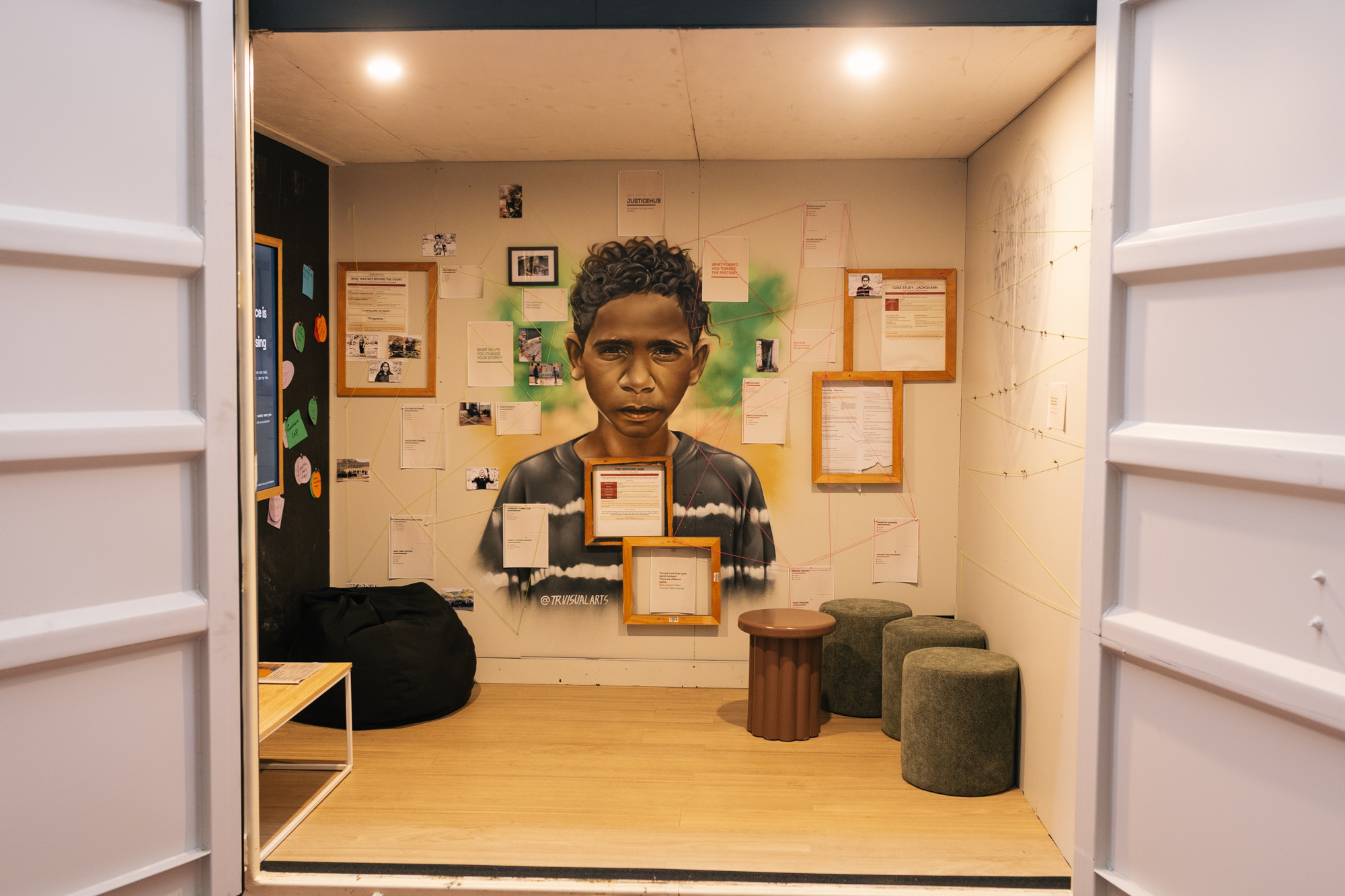
Not hidden.
Not reduced to a case.
Not converted into evidence for somebody else's argument.
Present.
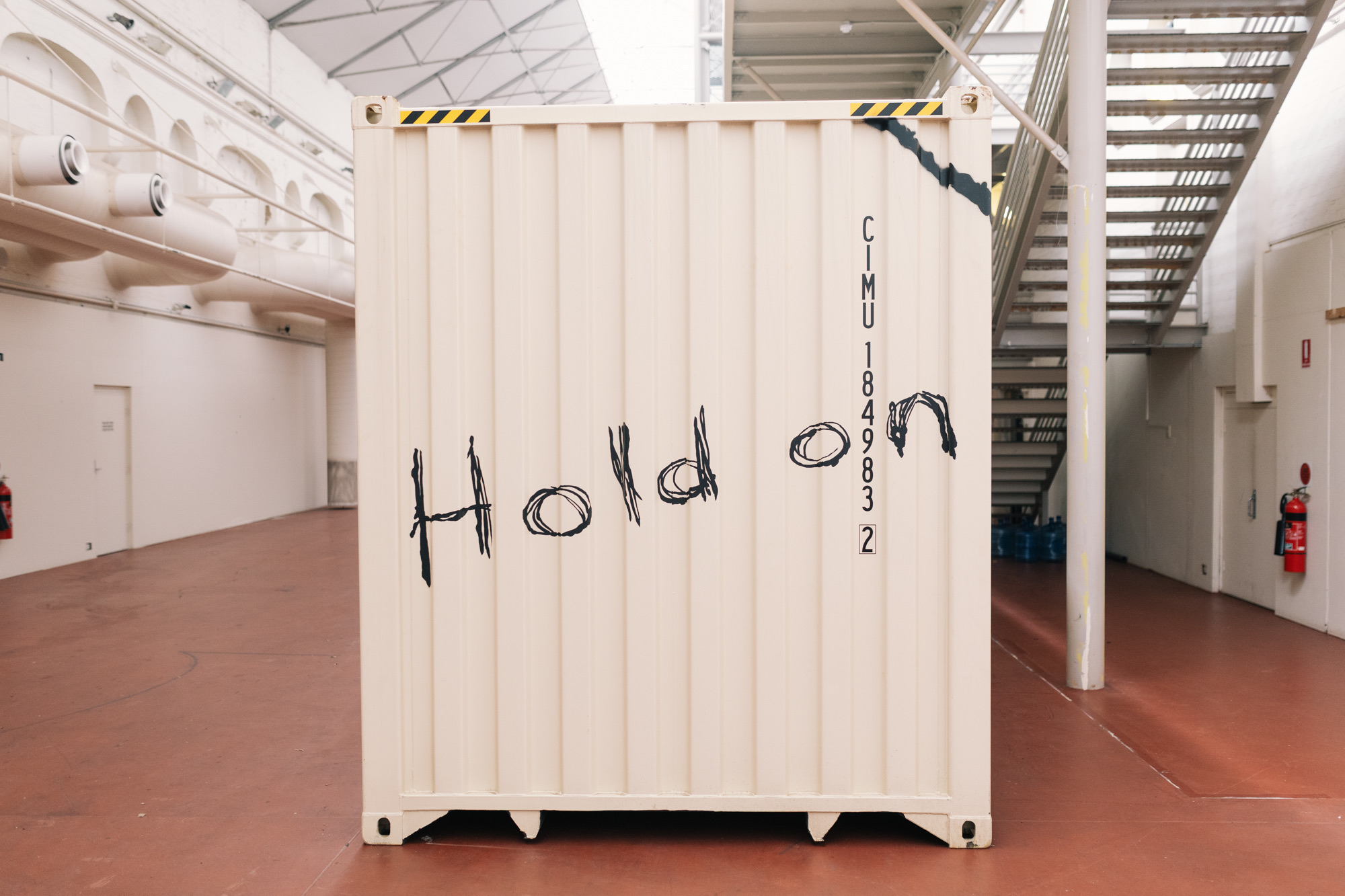
The artwork is now part of CONTAINED, held in a place capable of holding it. An installation that was almost homeless found a home because a cultural institution and an artist decided that it belonged.
This is how the work keeps moving. Not as a product delivered into a community, but as something changed by every relationship that takes responsibility for it. Every place leaves something inside it. Every person who enters becomes part of its record.
Isaiah stood in the room he built
Isaiah saw this work before Adelaide did. He stood with it at the farm while it was still being built, and he stood inside it again on East Terrace. His interview is recorded and held in Empathy Ledger, where permission for every word and photograph stays his to give and his to withdraw.
Isaiah worked on the first room. The cell. He built it from the inside out, because he had been in one.
You know what gets me the most? I hate jam sandwiches. I can't eat jam sandwiches now. I'll never touch a jam sandwich again.
He is precise about how he ended up inside, and he does not reach for anybody else to blame. “While I was trying to look for acceptance, trying to be a cool guy, I jumped in too deep and then just couldn't turn back. Well, that's what I felt like. I couldn't turn back. It was like I got into the ocean and started swimming at a really young age, without taking any swimming lessons.”
He does not tell that story often, and the reason matters. “I don't talk about it at all, unless someone asks me a question. My approach is I just want to tell people about what I'm doing now and how to avoid that world. If I sit here and tell stories about my incarceration, it probably will help a lot of kids see differently. But it'll also give a lot of kids the want to go in. The want of, I need that, I need to experience that, I'm not cool enough. I don't want to put that message out there.”
That is a young man refusing to let his worst years become another child's ambition. It is also a judgement on how this sector usually uses people like him. We ask for the hardest part of someone's life, we put it on a stage, and we call it lived experience.
He came to Adelaide. He spoke at the conference, which he had never done before. “It was scary at the start. But now that it's done, I feel accomplished. I feel like I've accomplished something really big.”
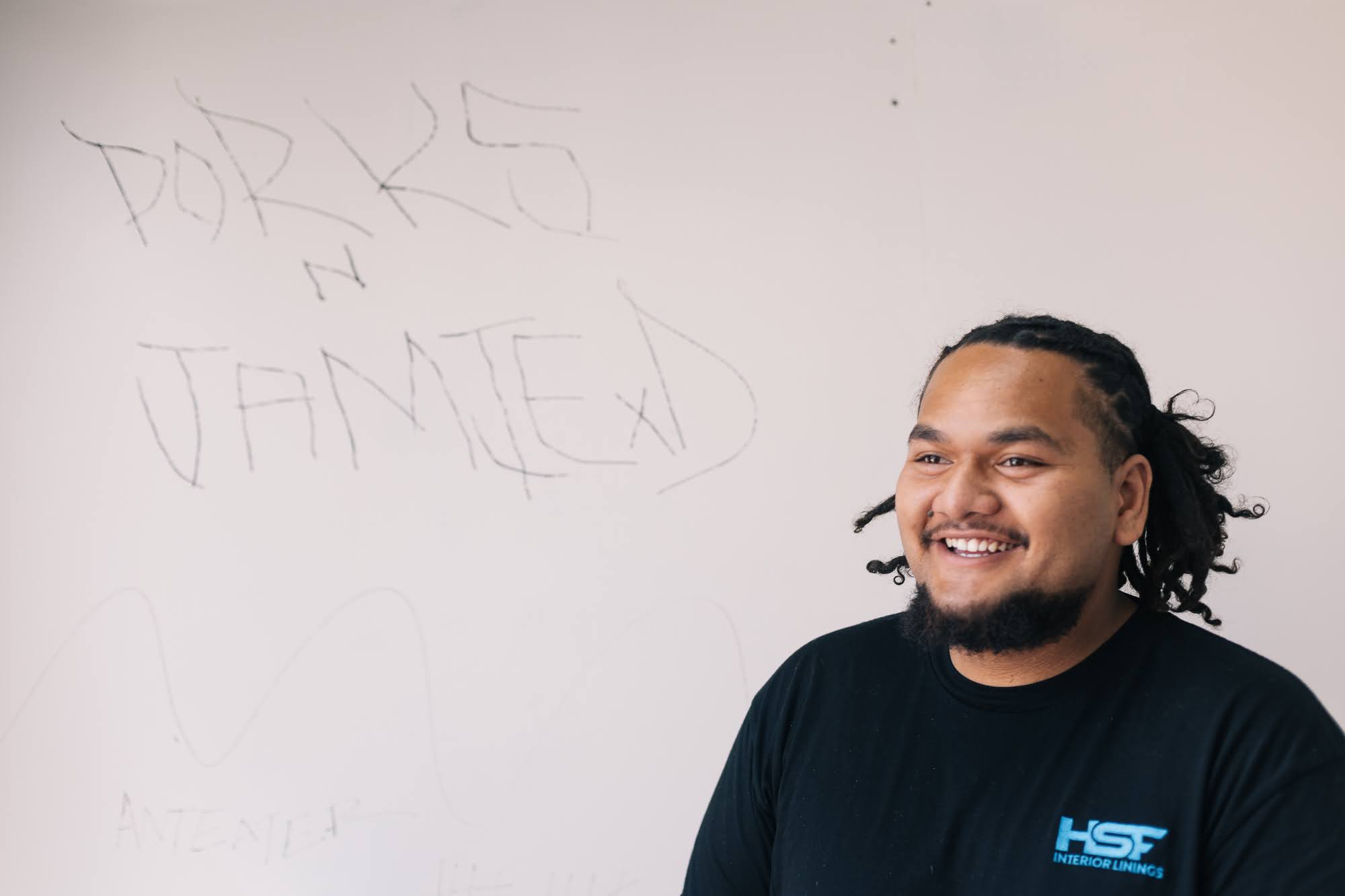
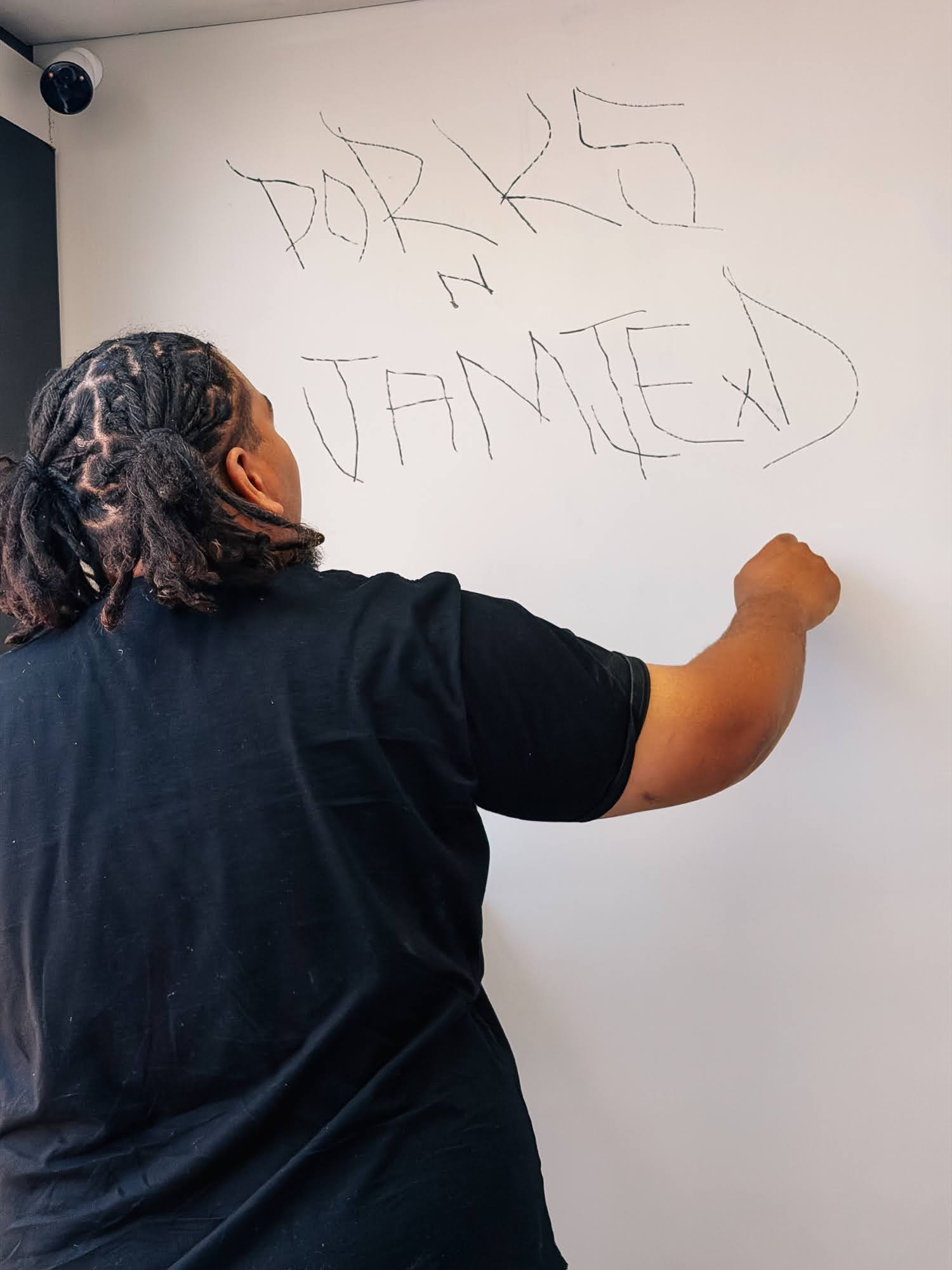
Asked what he wants a visitor to feel walking out of the room he helped build, he would not give a tidy answer.
I haven't really got an answer for that. I just want them to feel something.
Asked how it feels to have his hands on something this public, he moved the subject off himself entirely.
I don't really think it's about me. I'm just happy that people can see, because kids still live like that. There's still kids in the same room, in this exact room. So it doesn't matter how I feel. It's about how they feel.
Isaiah
That is the whole argument, and he made it better than we do. Not that lived experience is a credential to collect. That the person who has been in the room knows what the room does, and is the one pointing at the children still inside it.
He is not making claims about what comes next for him. “I think opportunities will just come as life goes. I'm just going to flow with it. Just going to keep mowing lawns till I get an email.”
There is an email to be sent. It is not his job to chase it.
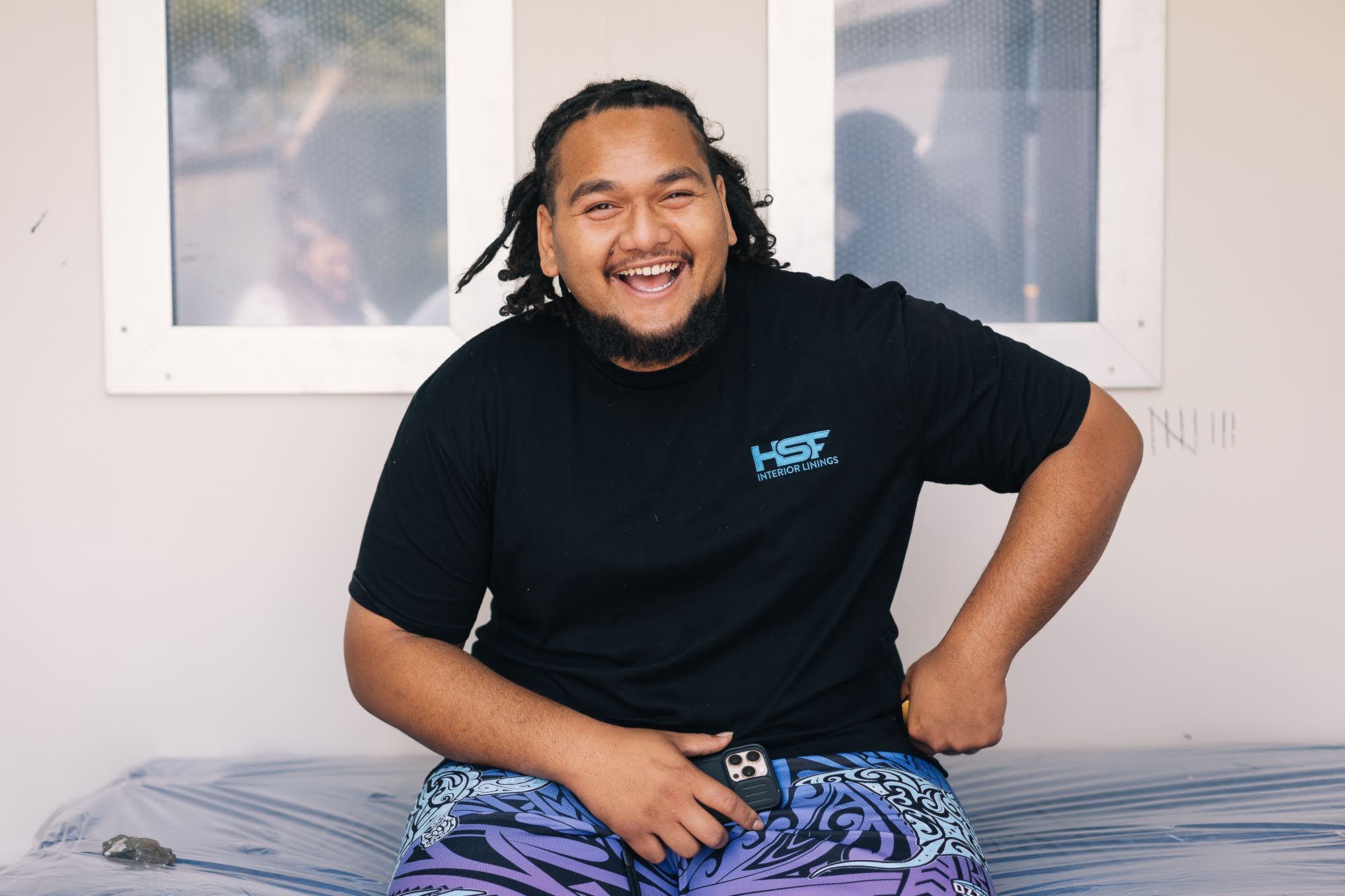
Isaiah came to Adelaide with Interlace Advisory, the crew he works with. Interlace is a lived experience advisory that partners with young people who have been through the youth justice system to design smarter, more impactful services. Their words for it: co-design, not consultation. Isaiah building the cell room from memory, then standing beside it at a national conference, is that idea made physical.
The circus, or the deep work
Now there are two paths in front of us. There is a philanthropy conference in Brisbane in September, alongside a justice and child protection conference. We have a strong relationship with the Youth Advocacy Centre, which could support young people to participate. There are people from education. There is a crew doing serious university mentoring and schools work.
We could repeat Adelaide. Search for a public site. Ask permission. Chase approvals. Try to pull people away from conference rooms. Push against a Queensland Government speaking the language of adult crime, adult time, as if saying the words often enough could turn a child into an adult.
We could hit the blockers. We could make a moment.
A moment people walk past.
Or we could choose the deeper work. After talking it through with one of our mentors, that is the path I want.
The container can sit at the Harvest at Witta, on ground where nobody gets to tell us it is four o'clock. Then we invite community organisations deliberately. They bring their people. They bring young people, families, workers and Elders. They bring the people they need beside them: funders, decision-makers, public servants, educators and allies.
Not delegates. Guests.
A delegate attends a session.
A guest enters a relationship.
We give the work time. We let people stay in the rooms. We build the JusticeHub stories and case studies with communities, not about them. We help organisations make their work visible without stripping it of its meaning. We follow the relationships instead of chasing the crowd.
The circus makes noise.
The deep work makes roots.
What we are actually building
CONTAINED is not only a container.
JusticeHub is not only a website.
Oonchiumpa is not a program to be admired from a distance.
These are parts of a larger act of remembering.
Communities already know how to hold their young people. They know the names. They know the families. They know the histories carried in the body and the strength carried through Country. They understand that justice cannot be separated from housing, food, culture, education, health, land, purpose, love and belonging.
The knowledge exists. What is missing is not another expert arriving to explain the problem. What is missing is the transfer of power, attention and resources to the people already doing the work.
That is what we want to build next: a national centre of excellence for youth justice, formed around the communities already creating the strongest alternatives. We help the public understand what those communities do. We help them tell their own stories. We help them raise resources without surrendering ownership of the work. We bring philanthropy and funding towards them.
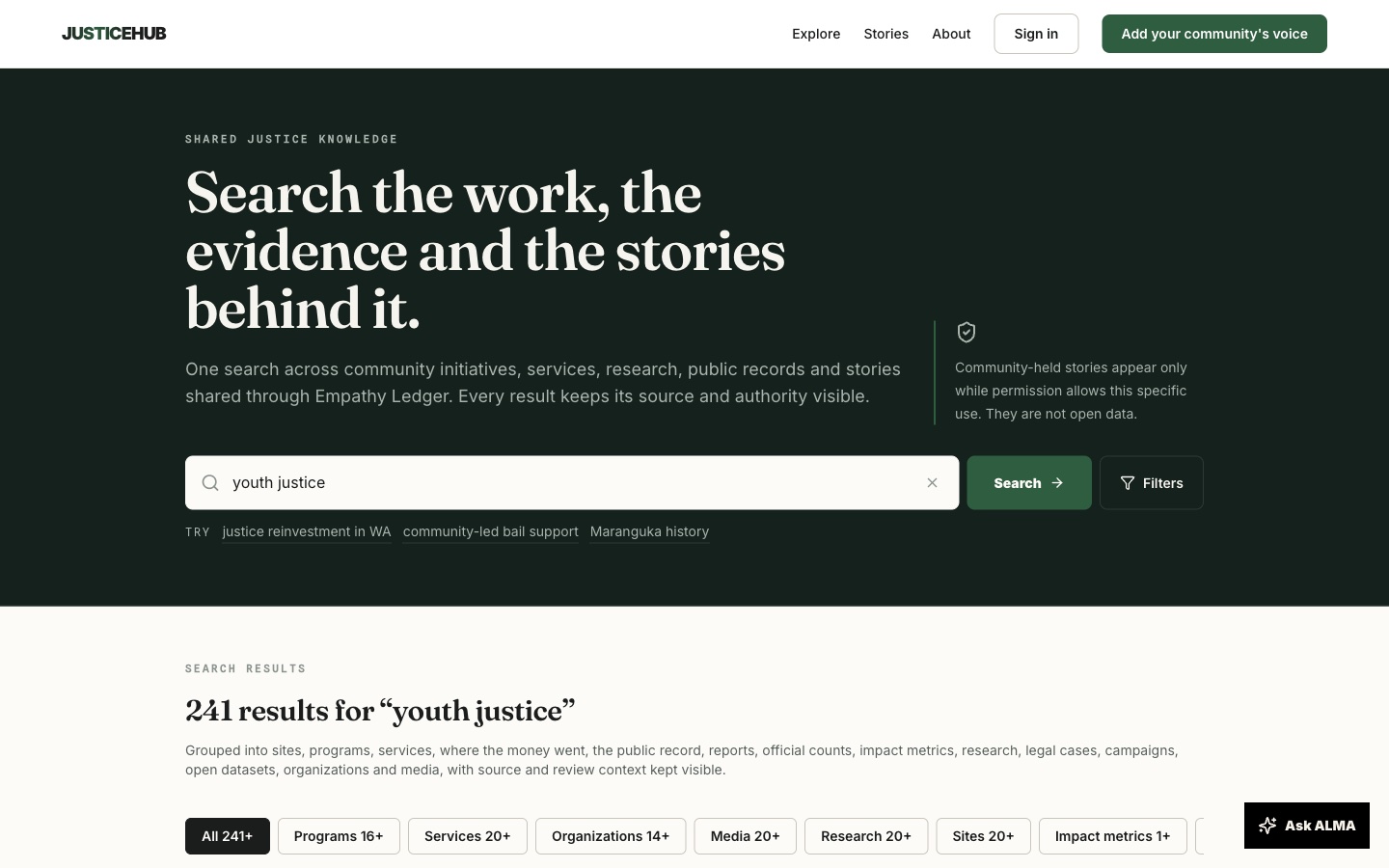
JusticeHub is the tool for that work. It is a search engine for justice: one search across the communities, the services, the money, the evidence and the public record, with every source kept visible. It holds the national picture so nobody has to argue from anecdote. And it is built to bring the people who want this work to happen together, and to tell the stories and case studies along the way. This page is one of them.
Yearly national gatherings.
State-based workshops.
A living network of doers.
Not another conference where people speak about communities after the communities have gone home. Not another hero. Not another program built around the idea that broken people need to be fixed.
A five to ten year commitment to justice reinvestment, community-led change, law reform and the unfinished relationship between justice, land and native title.
The aim is both practical and profound. To move this country away from a system that costs a fortune, separates children from everything that might steady them, and produces more harm. To move towards what communities have always known.
Young people need to be held close, not taken away.
They need responsibility, but they also need relationship.
They need boundaries that do not erase belonging.
They need somewhere to return to.
They need people who will still be there tomorrow.
A cell removes a young person from community and then calls the resulting isolation justice.
Community keeps the young person connected and calls them by their name.
That is the choice.
Communities across the country already redirecting justice resources towards what works.
Every initiative by state, stage and evidence. The alternative is not hypothetical, and this is the list of who is already running it.
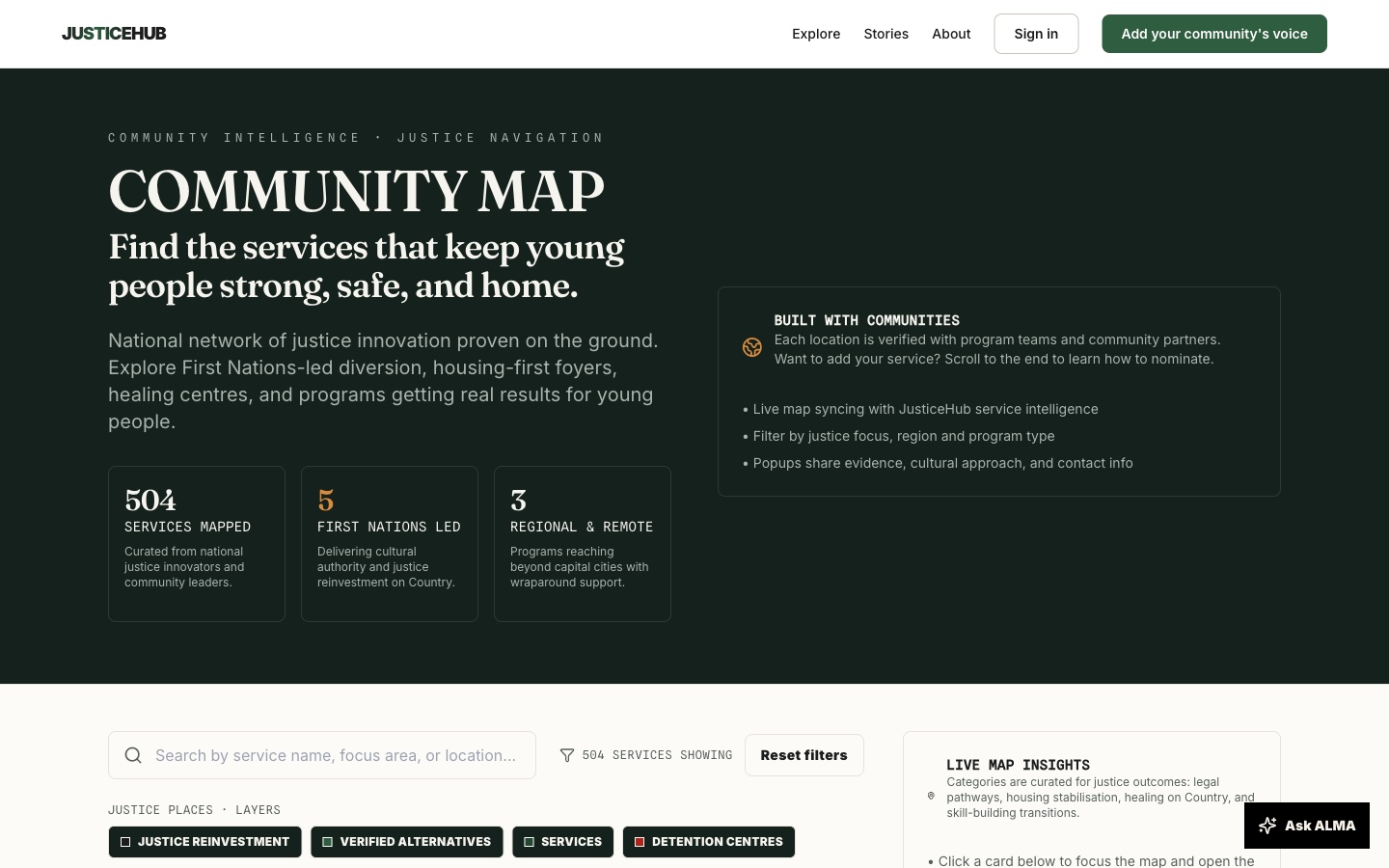
Communities, documented alternatives, services and detention centres on one national map.
Where the container has been, where it is going and how to host it.
If you run a community organisation and want your crew to experience CONTAINED, begin here.
Nobody gets to tell a community it is four o'clock.
Not while young people are still being taken from their families.
Not while communities are asked to prove what they have known for generations.
Not while fortunes are spent building walls around problems that relationship, culture and care could prevent.
The clock on the council wall said the working day was over.
The work was not over.
The container moved. A door opened elsewhere. People entered.
They wrote messages to a young man they had never met. An artist painted his face. A cultural institution gave the work a home. That is how change often begins. Not as a command from the centre. As one person refusing to close the door.