
The living atlas of youth justice in Australia
Australia already holds the answers. JusticeHub is where they become findable.
Communities across this country are keeping young people out of detention right now. The help lines, the alternatives, the money, the law, the stories: all of it exists, scattered and easy to ignore. This platform gathers it, cites it, and moves attention, money and authority toward the people doing the work, without making them accountable to us.
Start with a questionHow the search engine works
Community knowledge should be the first thing people find.
Search engines usually send attention toward government programs and the organisations with the largest communications teams. JusticeHub changes what gets surfaced by building the context around community-led work.
01
Community tells the story
People doing the work describe the program, the outcomes and what support is needed.
02
JusticeHub connects the record
Stories sit beside services, public evidence, funding and place, with the source and permission attached.
03
People can find and back it
Young people find support. Funders and government find community-led work that is already happening.
What it does
Six doors. Each one answers a question someone is asking today.
Find help now
Who to ring in your state, and the hours each line actually answers. No login, no funnel, no form between a young person and a phone number.
“It is 9pm in Queensland and my brother has been arrested. Who picks up right now?”
/youth-legal-help →See what exists
Community-led alternatives, the services around them, and the living map of who is doing the work. Where the evidence is thin, the record says so instead of dressing up.
“What is already running on Country near Mount Isa, and who operates it?”
/search →Follow the money
Who was paid, on what basis, said by whom, on what date. Every figure carries its measure, and the platform refuses arithmetic across two different bases rather than leaving you to spot it.
“What did Queensland actually commit to Staying on Track, and over how many years?”
/search?type=funding →Justice reinvestment
The national register of communities taking the pen back: 45 on the register, a finder, and the door to claiming your own record. The community, never the platform, decides what gets published.
“Which communities near ours are running justice reinvestment, and how did they start?”
/communities/justice-reinvestment →Hear the stories
Community voices with consent attached, held by Empathy Ledger and rendered here at the moment you load the page. If consent cannot be checked, the story does not show.
“What does a night patrol sound like in the words of the people who run it?”
/stories →Feel it: CONTAINED
The artform. A shipping container, the numbers on the wall, and what it does to a room. For the moments when a spreadsheet cannot carry the weight.
“How do I bring what detention costs into a room full of people who have never thought about it?”
/contained →How it stays honest
The discipline is the product.
Every figure on this platform carries its source and the measure it was made on. When two numbers were made on different bases, we refuse the comparison rather than hand you a wrong one. A figure without its basis is a claim, not evidence.
Machine work never wears a person’s name. When software collected a record, the record says so, and no automated check is ever presented as a human having verified it.
A community’s own words sit above anything we wrote. And red on this site means one thing only: critical data or a destructive action. Nothing else is allowed to wear it, so red always tells the truth.
Who holds what
Three holders, one boundary.
Empathy Ledger
Holds people, stories and consent. We render only what consent allows, at render time.
The public registers
The data we hold comes from public sources we collect and cite ourselves: registers, budgets, parliamentary records. Others in this space, like Just Reinvest, run their own tools; we link to them without speaking for them.
JusticeHub
The interpretation, story and consequence layer — and never the owner of the voice.
40 communities placed · 5 listed without a map coordinate
The justice reinvestment register: 45 communities on the curated register, 40 placed from a source. The unplaced stay off the map rather than wrong on it.
Open the full mapWhere this can go
From a shared digital atlas to justice hubs in community.
The website is the beginning. Over time, the same community-led network can support shared learning, local gatherings and physical basecamps where a young person can find help in one place.
Digital atlas
Find the people, programs, stories, evidence and money.
Shared learning
Community-led workshops and gatherings built around work to be done.
Local basecamps
Services share a place and resources so young people do not navigate the system alone.
How to be involved
Five rungs, and an honest ladder.
Every record on JusticeHub sits on one of five rungs. Most sit on the first, and the whole platform exists to move them up.
01
Found
We found the public record and cited where it came from. Most records on the platform are here, and we say so.
02
Claimed
The community has said: this record describes us, and we hold the key to it now.
03
Contributing
The community is correcting the record and adding what only it knows.
04
Publishing
The community has stood behind an edition in its own words, through a gate no administrator can open for it.
05
Mentoring
The community is helping the next community walk the same road.
For a community
This is our community.
Your record may already be here, written from public sources. Claiming it puts the pen in your hand: correct it, add to it, publish what you stand behind, withdraw it later. No administrator can do any of that on your behalf.
For a person with a story
Your story stays yours.
Stories on JusticeHub are held by Empathy Ledger under the storyteller’s own consent, attributed the way you choose, and withdrawable at any time. We render the story; we never own it.
For a lawyer
Evidence you can cite.
Justice Matrix holds legal-grade material with provenance, built for court work and UN submissions. Every claim resolves to a source a judge can check.
For a funder
Back what already works.
The communities holding young people well are findable, and the money beside them is on the record. Payment buys depth and analysis. It never buys authority over what a community says about itself.
For anyone
Start with a question.
The whole public layer is open. Ask what detention costs, what your state funds, what a community near you is already doing. Or talk to a person.
The map is drawn. The pen is waiting.
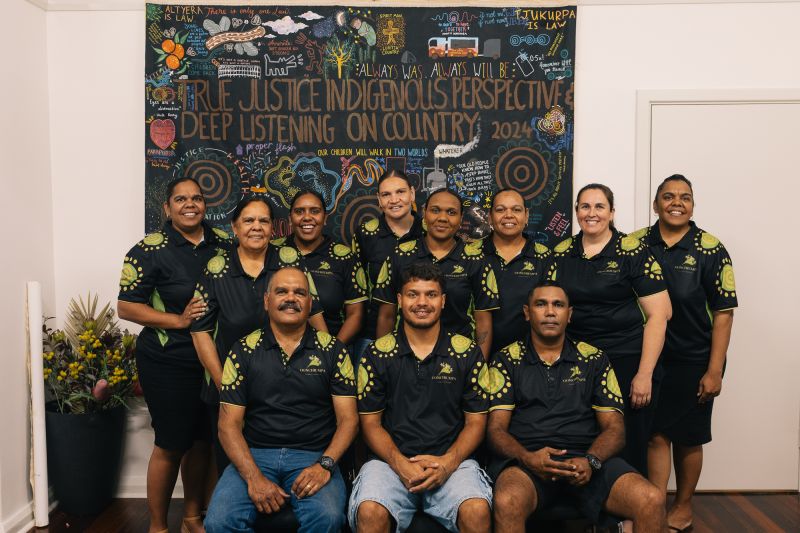
The answers are here. Communities like Oonchiumpa in Mparntwe and Maranguka in Bourke did not wait for permission; they built the work first, and the record is catching up to them. What JusticeHub adds is the finding: a country’s worth of evidence, money and voice, gathered where a community, a lawyer or a funder can reach it. The next mark on the map is yours to make.